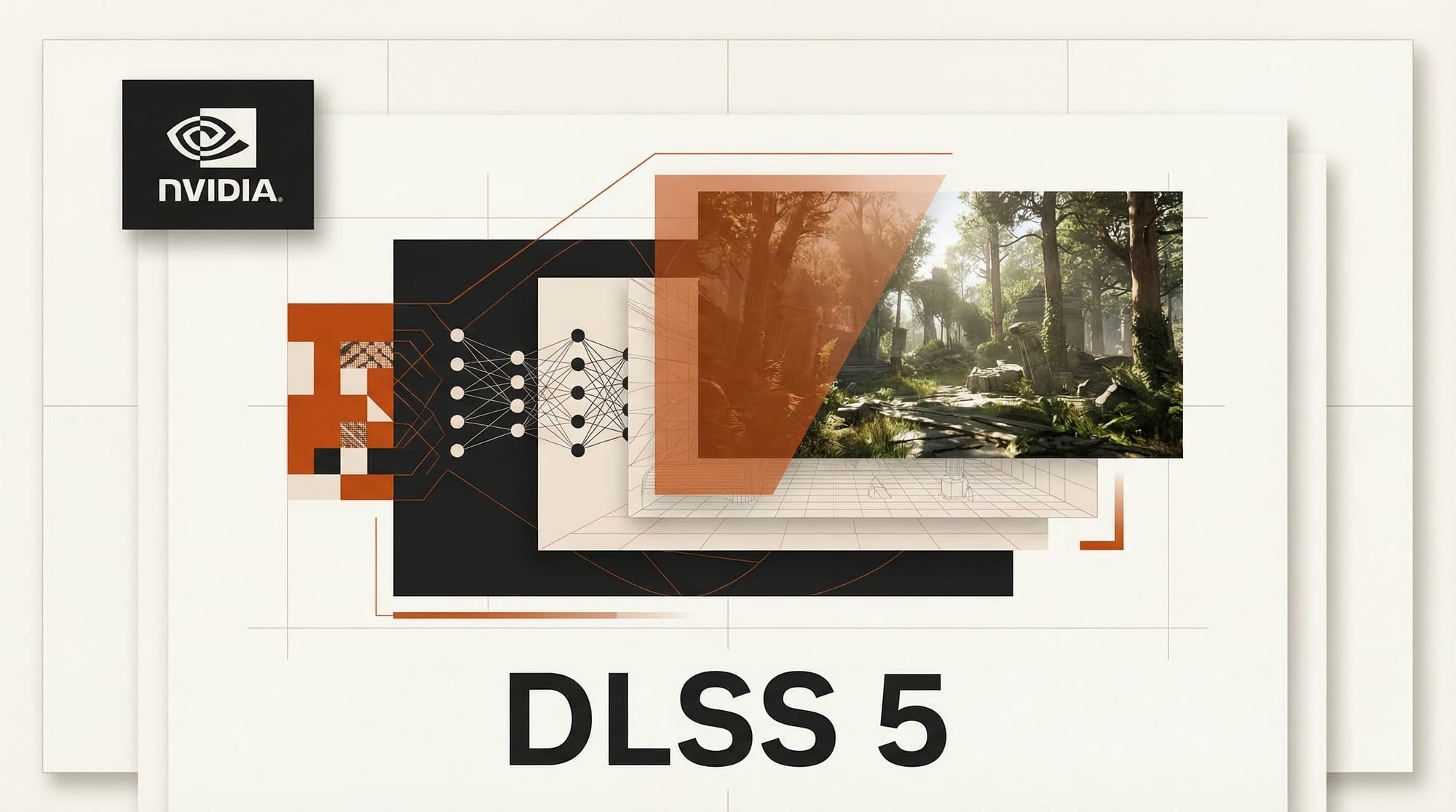
NVIDIA unveiled DLSS 5 at GTC 2026, introducing a generative AI-powered neural rendering system that transforms game visuals with photoreal lighting and materials. Jensen Huang called it "the GPT moment for graphics," marking the biggest shift in real-time rendering since ray tracing debuted in 2018.
What Happened
During the GTC 2026 keynote on March 16, NVIDIA introduced DLSS 5 as a complete rethinking of how AI enhances game visuals. Unlike DLSS 4.5, which focused on frame generation and upscaling, DLSS 5 applies generative AI directly to a game's lighting model. The system takes color and motion vector data from each frame, then uses a trained neural network to generate photoreal lighting and materials in real time.
The AI model understands complex scene elements like hair, fabric, translucent skin, and environmental lighting conditions. It produces results that are deterministic and anchored to the underlying 3D data, meaning it does not hallucinate new objects or geometry.
Why It Matters
DLSS 5 represents a fundamental shift from AI as a performance tool to AI as a core rendering component. For game developers and visual creators, this means scenes that previously required expensive offline rendering can now run in real time. The technology also gives developers detailed controls for intensity, color grading, and masking, letting artists decide exactly where and how enhancements appear.
NVIDIA is framing this as a pattern that extends beyond gaming. In Omniverse, the same approach accelerates digital twins for factories and cities. In Isaac and Drive Sim, it generates diverse training environments for robots and autonomous vehicles. Any field that needs real-time photorealistic visuals stands to benefit.
Key Details
- Hardware: Built for Blackwell architecture RTX GPUs (RTX 50-series) with 5th-generation Tensor Cores. Early demos ran on dual RTX 5090 systems, though the shipping version targets single-card operation.
- Integration: Uses the existing NVIDIA Streamline framework, the same pipeline developers already use for DLSS and Reflex.
- Launch partners: Bethesda, Capcom, Hotta Studio, NetEase, NCSoft, S-Game, Tencent, Ubisoft, and Warner Bros. Games. Previews shown in Resident Evil Requiem, EA Sports FC, Starfield, and Hogwarts Legacy.
- Availability: Launching fall 2026.
- Backward compatibility: Some modes will work on older RTX cards.
What to Do Next
Game developers and technical artists should review the NVIDIA DLSS 5 documentation and explore the Streamline SDK for early integration planning. Creators working with real-time 3D visualization in tools like Unreal Engine or Omniverse should watch for SDK previews this summer. For a deeper technical breakdown, PC Gamer's hands-on analysis covers the current state of the technology and its limitations.