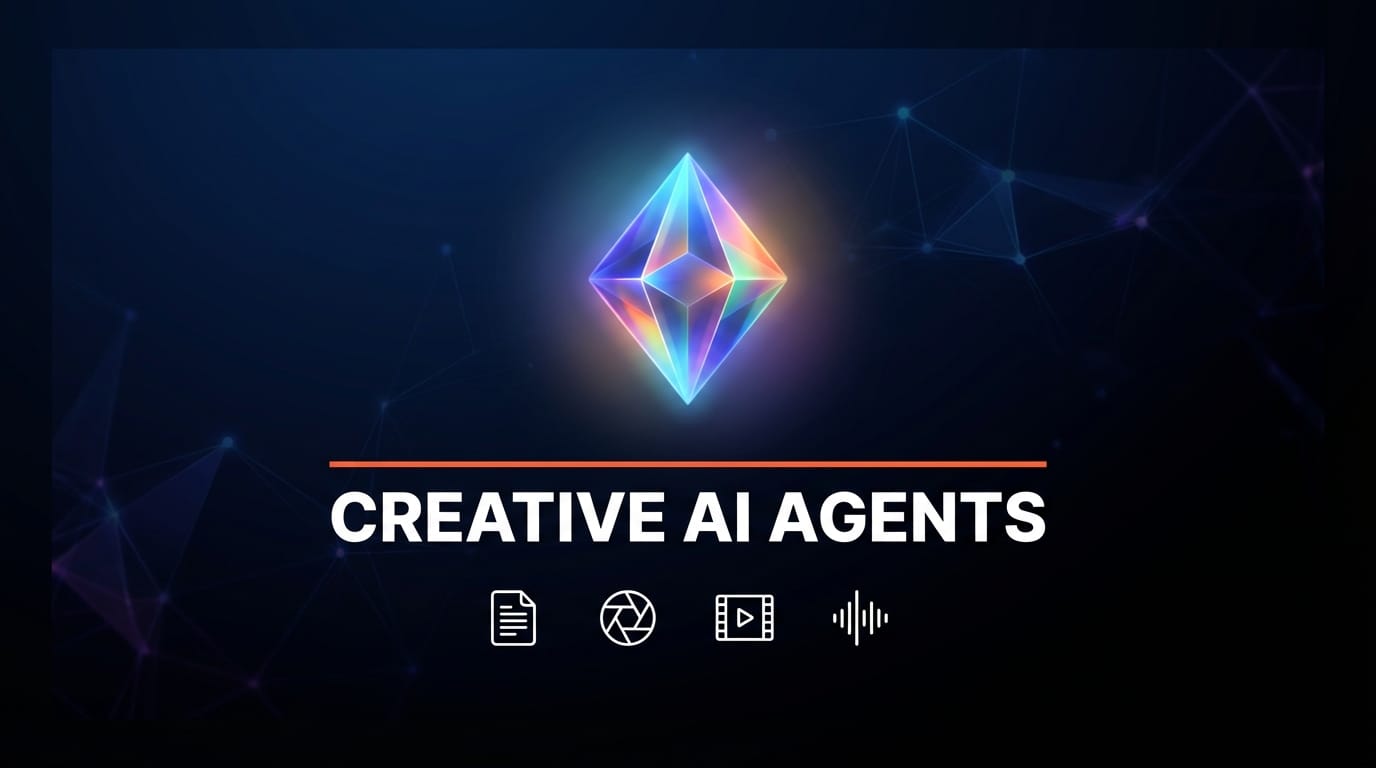
Luma launched Creative AI Agents on March 5, 2026, powered by its new Uni-1 model. The system handles end-to-end creative production across text, image, video, and audio, coordinating with external models like Google Veo 3, Nano Banana Pro, ByteDance Seedream, and ElevenLabs. Two of the world's largest advertising groups, Publicis Groupe and Serviceplan Group, are already using it in production.
What Happened
Luma's Creative AI Agents are autonomous systems built on Uni-1, a multimodal model designed to orchestrate complex creative workflows. Rather than generating a single asset at a time, an agent takes a creative brief and produces a complete campaign: scripts, images, video, voiceover, and music in a coordinated pipeline.
The system works by routing tasks to specialized models. Video generation goes through Google Veo 3 or Luma's own Ray models. Image generation uses Nano Banana Pro or ByteDance Seedream, depending on the task. Voice and audio run through ElevenLabs. Uni-1 acts as the orchestration layer, deciding which model handles each piece and ensuring consistency across outputs.
Two features separate this from existing AI creative tools. Persistent context means the agent remembers brand guidelines, style preferences, and project history across sessions. Self-critique refinement means the agent evaluates its own outputs against the brief and iterates before delivering results, reducing the back-and-forth that typically slows AI-assisted production.
Why It Matters for Creators
Most AI creative tools operate in isolation. You generate an image in one tool, write copy in another, create video in a third, then manually ensure everything looks cohesive. Google Flow took a step toward unification by merging its creative AI tools, but Luma's agents go further by collapsing the entire workflow into a single system that handles coordination automatically.
The enterprise deployments signal where the market is heading. Publicis Groupe (the world's third-largest advertising company) and Serviceplan Group (Europe's largest independent agency network) are not running experiments. They are using these agents for client work. When agencies at that scale adopt a tool, it typically becomes an industry standard within 12 to 18 months.
For independent creators and small studios, the model-routing approach is worth watching. Instead of being locked into one AI provider's strengths and weaknesses, the agent picks the best available model for each task. That flexibility has historically required custom engineering. Luma is packaging it as a product.
Key Details
Launch date: March 5, 2026
Core model: Uni-1 (multimodal orchestration)
External models: Google Veo 3, Nano Banana Pro, ByteDance Seedream, ElevenLabs
Capabilities: Text, image, video, and audio generation in a unified pipeline
Key features: Persistent context, self-critique refinement, multi-model routing
Enterprise users: Publicis Groupe, Serviceplan Group
Company: Luma AI (San Francisco)
What to Do Next
If you run a creative studio or freelance operation, explore how Luma's agents handle a real brief. Test it against your current multi-tool workflow to measure the time difference on a comparable project.
Watch for pricing and access details on Luma AI's website. Enterprise-first launches often take weeks or months to open up to individual users, but early access requests are typically available through the company's website.
For creators already using multiple AI tools in their pipeline, this is a preview of where the industry is going: orchestration layers that manage models rather than replacing them. Start thinking about your creative workflow as a system, not a collection of individual tools.
This story was covered by Creative AI News. Subscribe for free to get the weekly digest.