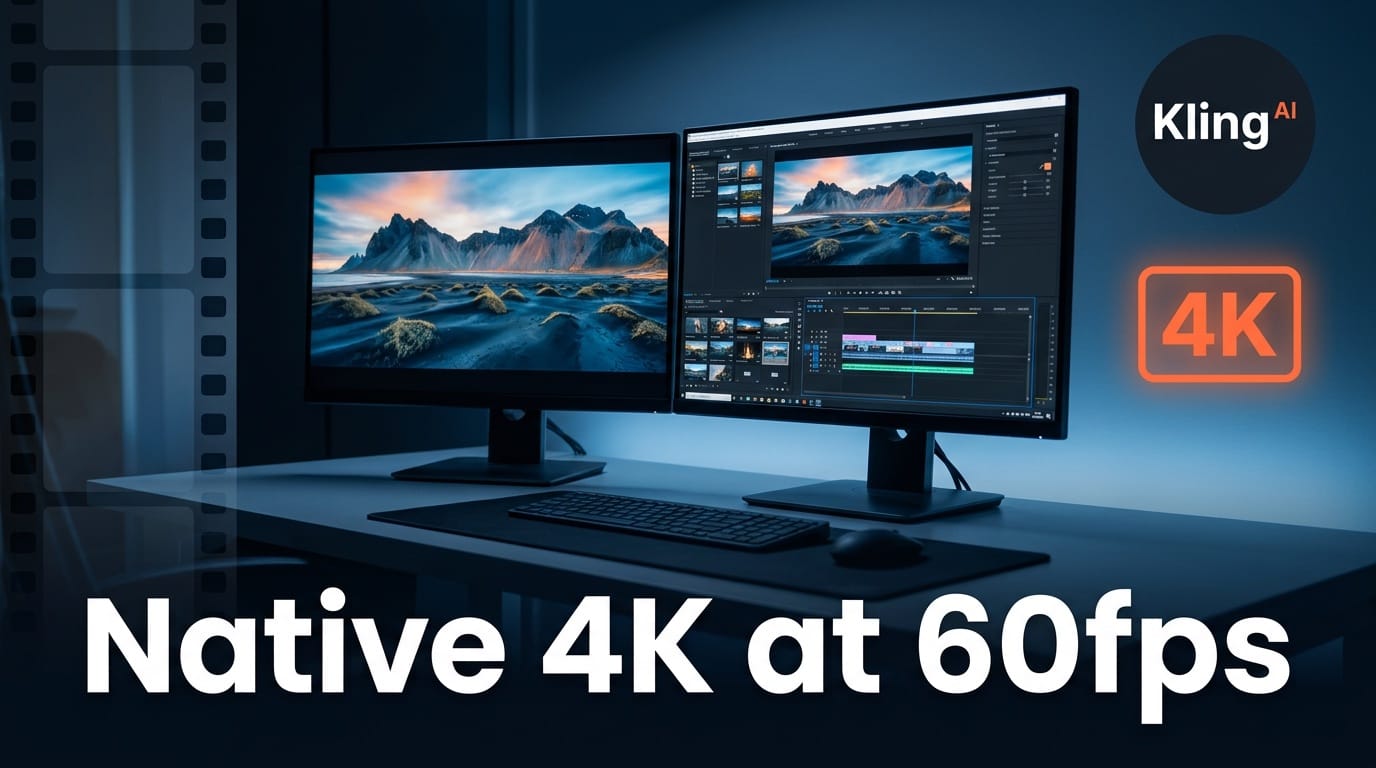
Kuaishou launched Kling 3.0 on February 4, 2026, making it the first AI video generator to produce native 4K resolution at 60 frames per second. The model generates synchronized audio in the same pass, eliminating the need for separate audio tools.
What Happened
Kling 3.0 is built on a unified multimodal framework that outputs video and audio simultaneously. The model generates at 3840x2160 resolution natively, not upscaled from lower resolutions like competing tools. At 60fps, it enables slow-motion extraction, a technique borrowed from traditional film production that was previously impossible in AI video.
The biggest addition is multi-shot storyboarding. Kling 3.0 can generate up to six camera cuts in a single generation with automatic visual consistency across all cuts. That means you can describe an entire scene sequence and get a coherent result without stitching clips together manually.
For audio, the model generates synchronized speech in English, Chinese, Japanese, Korean, and Spanish. It handles multi-character dialogue scenes where each character speaks a different language, with user control over delivery, content, and speaking order.
Why It Matters for Creators
If you produce short-form video content, product demos, or social media clips, Kling 3.0 removes several steps from your workflow. Native 4K means no upscaling artifacts. Native audio means no syncing in post. Multi-shot generation means you can prototype entire sequences before committing to a full production.
The 60fps output is particularly useful for creators who need slow-motion footage. Previously, achieving this required shooting at high frame rates with physical cameras or using frame interpolation tools that introduce visual artifacts. Kling 3.0 generates clean slow-motion natively. However, physics errors in AI video remain an open challenge. AMI Labs' $1B investment in world models aims to solve these problems at the architectural level, which could benefit all video generators including Kling.
What to Do Next
Kling 3.0 is available through the Kling AI platform. The model supports text-to-video, image-to-video, and reference-based generation at up to 15 seconds per clip. If you currently use Runway, Pika, or Sora for video generation, test Kling 3.0 on a comparable prompt to see the quality difference at native 4K. For a unified workflow that combines video with image and audio generation, see how Google Flow merges its creative AI tools into one platform.
This story was covered by Creative AI News.
Subscribe for free to get the weekly digest every Tuesday.