Meta is spending $600 billion on AI data centers, cutting 16,000 jobs, and still falling behind Google and OpenAI. In a single week in March 2026, the company delayed its flagship AI model, acquired two agent startups, and reportedly began planning the largest layoffs in its history. For the three billion people who use Meta platforms daily, and the millions of creators who depend on them for income, the signals are impossible to ignore.
Background and Context
Meta's AI ambitions have been building for years, but 2026 marks the point where those ambitions collided with reality.
The trouble started with Llama 4. When Meta released its fourth-generation open-source model in April 2025, the launch was overshadowed by accusations of benchmark manipulation. Yann LeCun, Meta's chief AI scientist, later confirmed to the Financial Times that the team "used different models for different benchmarks to give better results." CEO Mark Zuckerberg was reported to be "really upset" and subsequently sidelined the entire generative AI organization.
That fallout set the stage for everything happening now. Zuckerberg restructured Meta's AI efforts into Meta Superintelligence Labs (MSL), a new division run by former Scale AI CEO Alexandr Wang. The mission: build "personal superintelligence" that serves Meta's 3.5 billion daily users. The budget: up to $135 billion in capital expenditure for 2026 alone, with $600 billion earmarked for AI data centers by 2028.
But throwing money at the problem has not closed the gap. And the events of this past week made that painfully clear.
Deep Analysis
The Model Gap: Avocado Falls Short
On March 12, reports emerged that Meta had delayed "Avocado," its next-generation AI model, from March to at least May 2026. Internal benchmarks placed Avocado's performance between Google's Gemini 2.5 and Gemini 3.0, meaning it improved on Llama 4 but still trailed the leading systems from Google, OpenAI, and Anthropic in reasoning, coding, and long-form writing.
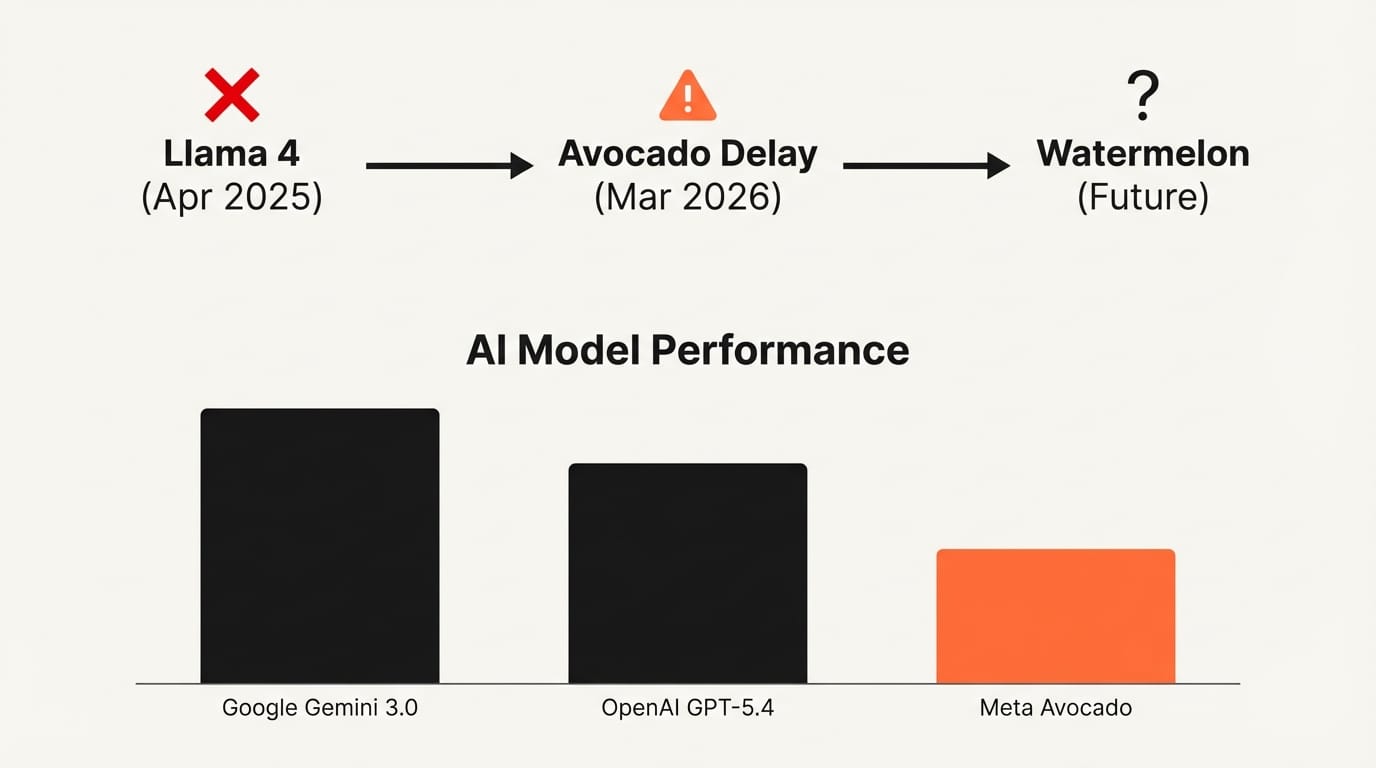
The delay is the second for Avocado, which was originally planned for late 2025. More striking: Meta leadership reportedly discussed licensing Google's Gemini technology as a temporary measure for its own products. No deal was reached, but the fact that a company spending $135 billion per year on AI even considered licensing a competitor's model reveals the depth of the gap.
Meta is also developing "Watermelon," a successor to Avocado, and "Mango," an image and video generation system. But none of these are ready to ship. The company that pioneered open-source AI with Llama is now playing catch-up on its own proprietary models.
The Acquisition Spree: Buying What You Cannot Build
While its models lag, Meta has been acquiring talent and technology at speed.
On March 10, TechCrunch reported that Meta acquired Moltbook, a viral social network built exclusively for AI agents. Moltbook launched in late January 2026 as a Reddit-style platform where AI bots autonomously post, comment, and vote. It attracted millions of registered bots within days. The deal was an acqui-hire: co-founders Matt Schlicht and Ben Parr will join Meta Superintelligence Labs on March 16. Creative AI News covered the acquisition in detail in our initial report.
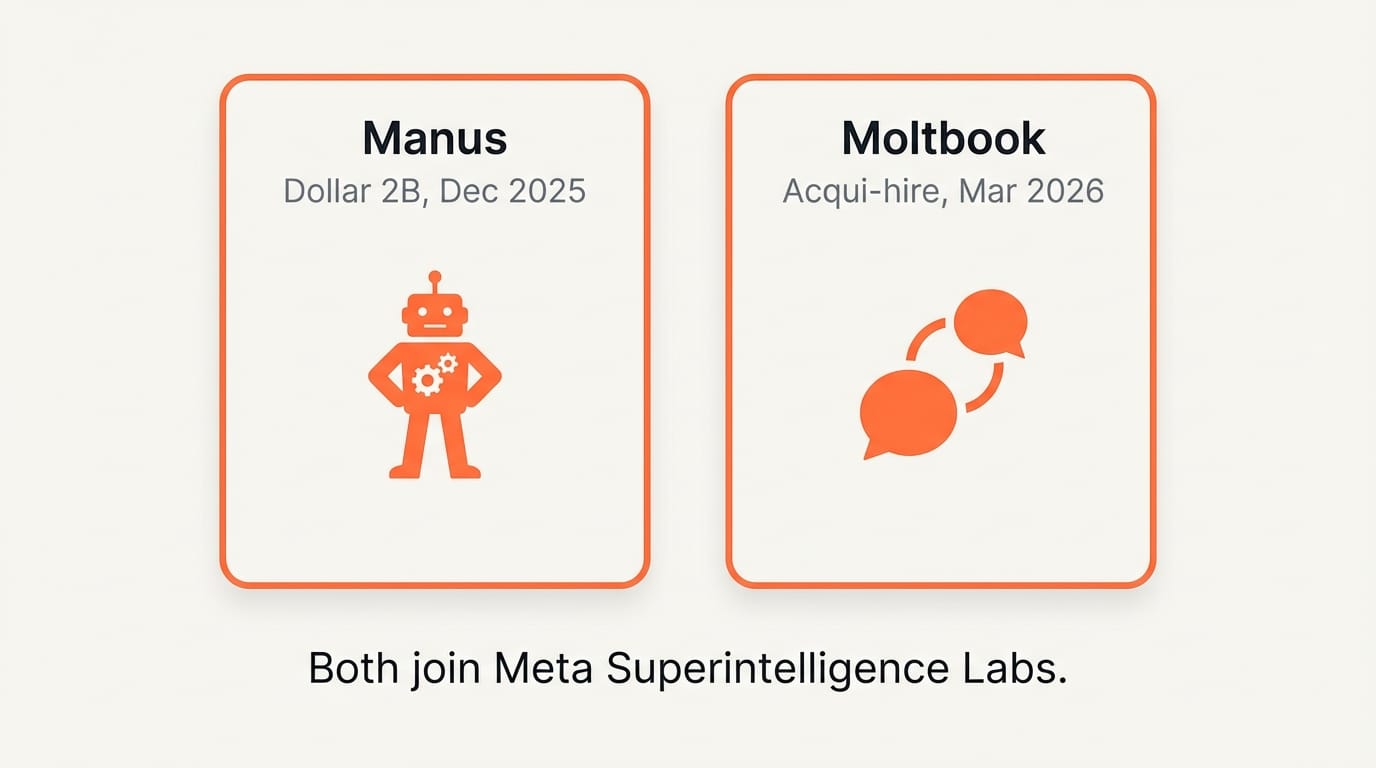
The Moltbook deal followed a larger move. In late December 2025, Meta acquired Manus, a Singapore-based AI agent startup, for over $2 billion. Manus had built a general-purpose AI agent capable of executing complex tasks like market research, coding, and data analysis. The company claimed over $100 million in annualized revenue just eight months after launch. The deal triggered a review by China's Ministry of Commerce, since Manus originated from Chinese startup Butterfly Effect.
The pattern is clear. Meta lost the acqui-hire of OpenClaw creator Peter Steinberger to rival OpenAI, so it pivoted to Moltbook. It could not build competitive agent infrastructure fast enough, so it bought Manus. When your models cannot keep pace, you acquire the people and products that can.
The Human Cost: 16,000 Jobs for Data Centers
On March 14, TechCrunch reported that Meta is planning to cut up to 20 percent of its 79,000-person workforce, roughly 16,000 jobs. Meta spokesperson Andy Stone called the reporting "speculative reporting about theoretical approaches," but the logic behind the cuts is straightforward: the $600 billion AI infrastructure commitment is consuming capital faster than the current headcount structure can sustain.
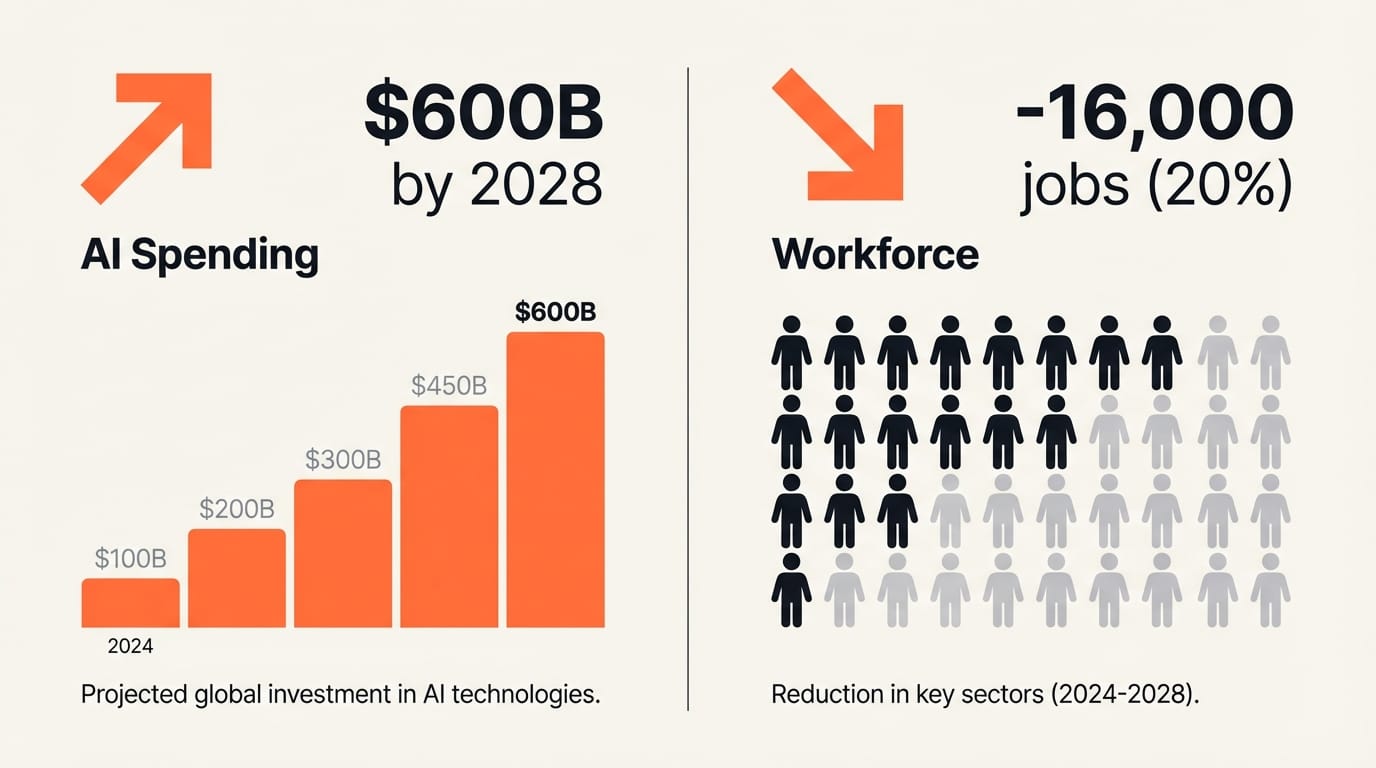
This would be Meta's third major round of layoffs in four years. The company cut 11,000 jobs in November 2022 and another 10,000 in early 2023. Those cuts were framed as efficiency measures after the metaverse spending backlash. This time, the driver is different: Meta is not pulling back from a failed bet. It is doubling down on AI and cutting people to pay for it.
The company is also recruiting aggressively for its AI divisions, offering multi-year compensation packages worth hundreds of millions of dollars to top researchers. The result is a two-speed workforce: massive investment in a small number of AI specialists, combined with broad reductions across product development, content moderation, and creator support.
Impact on Creators
Creator support will thin out. Meta's creator programs, including the Instagram Creator Marketplace, branded content tools, and Reels monetization infrastructure, are maintained by teams that could face cuts. If 20 percent of the workforce goes, response times for creator issues will slow and feature development will stall.
AI tools are coming, but not the ones you expect. Zuckerberg has described a future where "projects that used to require big teams" are "accomplished by a single very talented person" using AI-native tooling. For creators, this means Meta will eventually ship AI tools for content creation, editing, and audience analysis. But Avocado's delay shows those tools are further out than the company would like.
Agent infrastructure matters. The Moltbook and Manus acquisitions signal that Meta sees AI agents as a core part of its platform future. For creators who use automated workflows, scheduling tools, or AI-powered content pipelines, the infrastructure those agents operate on is about to change. Agent-to-agent interaction could eventually be integrated into Instagram, Threads, and WhatsApp.
Platform stability is not guaranteed. The combination of workforce cuts and massive infrastructure investment creates execution risk. Features can ship slower, bugs can go unpatched longer, and monetization programs can change with less notice. Creators who are heavily dependent on a single Meta platform should be treating this as a signal to diversify.
Key Takeaways
- Meta delayed its Avocado AI model from March to May after internal tests showed it trailing Google, OpenAI, and Anthropic
- The company acquired Moltbook (AI agent social network) and Manus ($2B AI agent startup) to compensate for gaps in its own technology
- Planned layoffs of up to 16,000 employees (20% of workforce) are tied to funding $600B in AI data center spending by 2028
- Creator support teams, product development, and content moderation are all at risk of cuts
- Meta's AI tools for creators are coming but are delayed along with its underlying models
- Llama 4's benchmark scandal in 2025 triggered the leadership restructuring behind all of these moves
What to Watch
The next milestone is whether Avocado ships by May. If it does, and benchmarks genuinely compete with Gemini 3 and GPT-5.4, Meta regains credibility. If it slips again, expect more acqui-hires and a potential pivot to licensing external models.
Watch for any formal layoff announcement. Meta has not confirmed the Reuters report, but the company's 10-K filing and next earnings call will reveal the financial pressures driving these decisions.
For creators, the practical move is simple: make sure your owned channels, especially email lists and websites, are strong enough to absorb disruptions to Instagram's creator programs. Meta is choosing data centers over headcount. That tradeoff will be felt across every platform it operates.