In one week, five developments reshaped AI music creation. Suno v5.5 added voice cloning and custom model training. Google Lyria 3 Pro launched 3-minute structural tracks through the Gemini API. Udio settled copyright lawsuits with Universal and Warner, pivoting to a walled-garden licensed platform. Spotify rolled out Artist Profile Protection to block AI-attributed tracks. And streaming platforms reported 50,000 AI-generated songs uploaded daily, with 75 million deleted in the past year. This is not gradual evolution. March 2026 is the week AI music fractured into competing visions of what the technology should be and who it should serve.
Background
AI music generation has been building toward this moment for two years. Suno V5 Studio turned an AI music generator into a functional DAW earlier this year, crossing from novelty into production tool territory. Google Lyria 3 Pro brought structural composition to the largest AI platform. ElevenLabs added remix, stems, and lyric sync to Eleven Music, entering the market from the voice AI side. And labels fought back: Sony requested removal of 135,000 AI tracks impersonating its roster artists. RIAA lawsuits against Suno and Udio have been moving through courts since 2024.
What changed this week is that every faction, the generators, the platforms, the labels, and the artists, made decisive moves at the same time. The result is a market that no longer has a single trajectory.
Deep Analysis
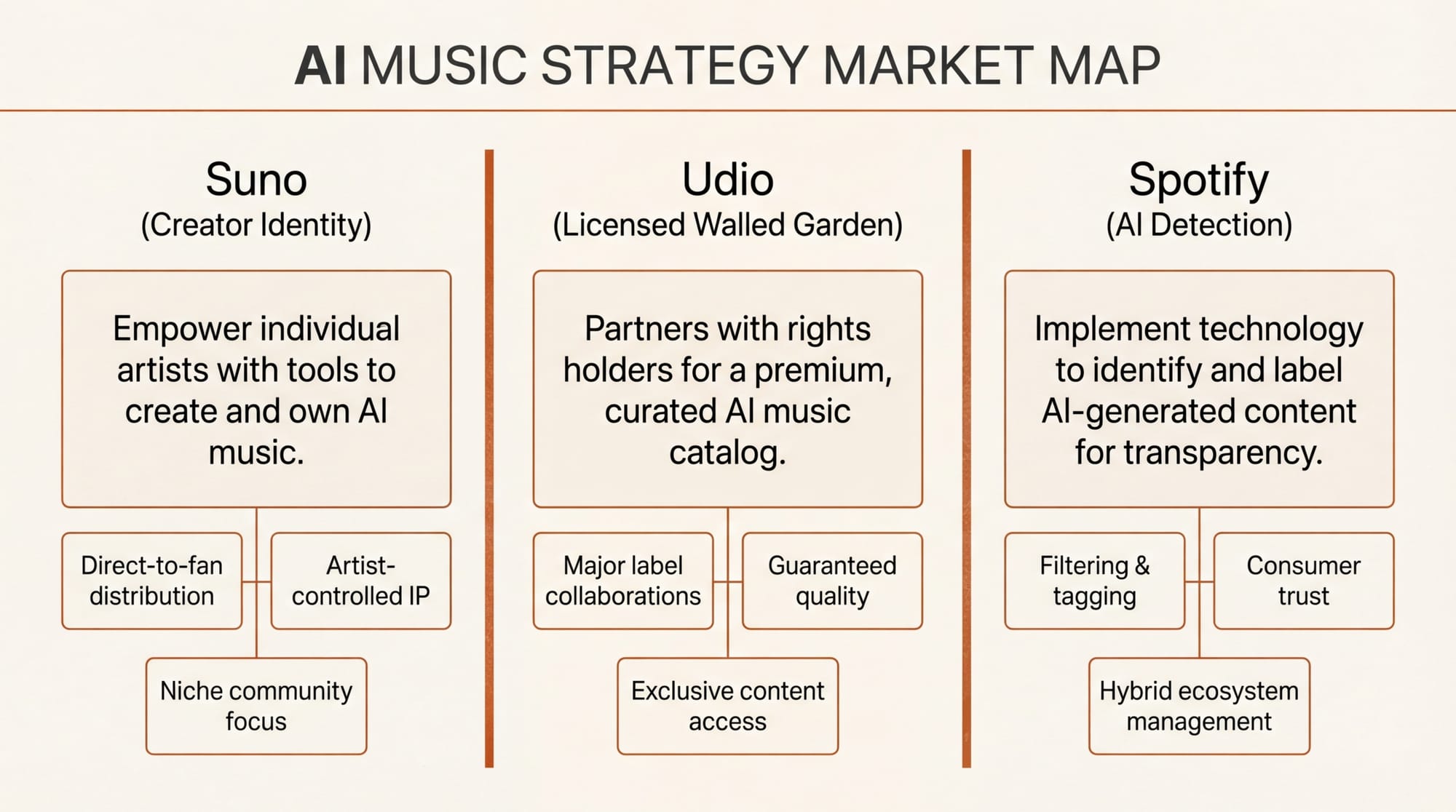
Suno Bets on Creator Identity Over Mass Generation
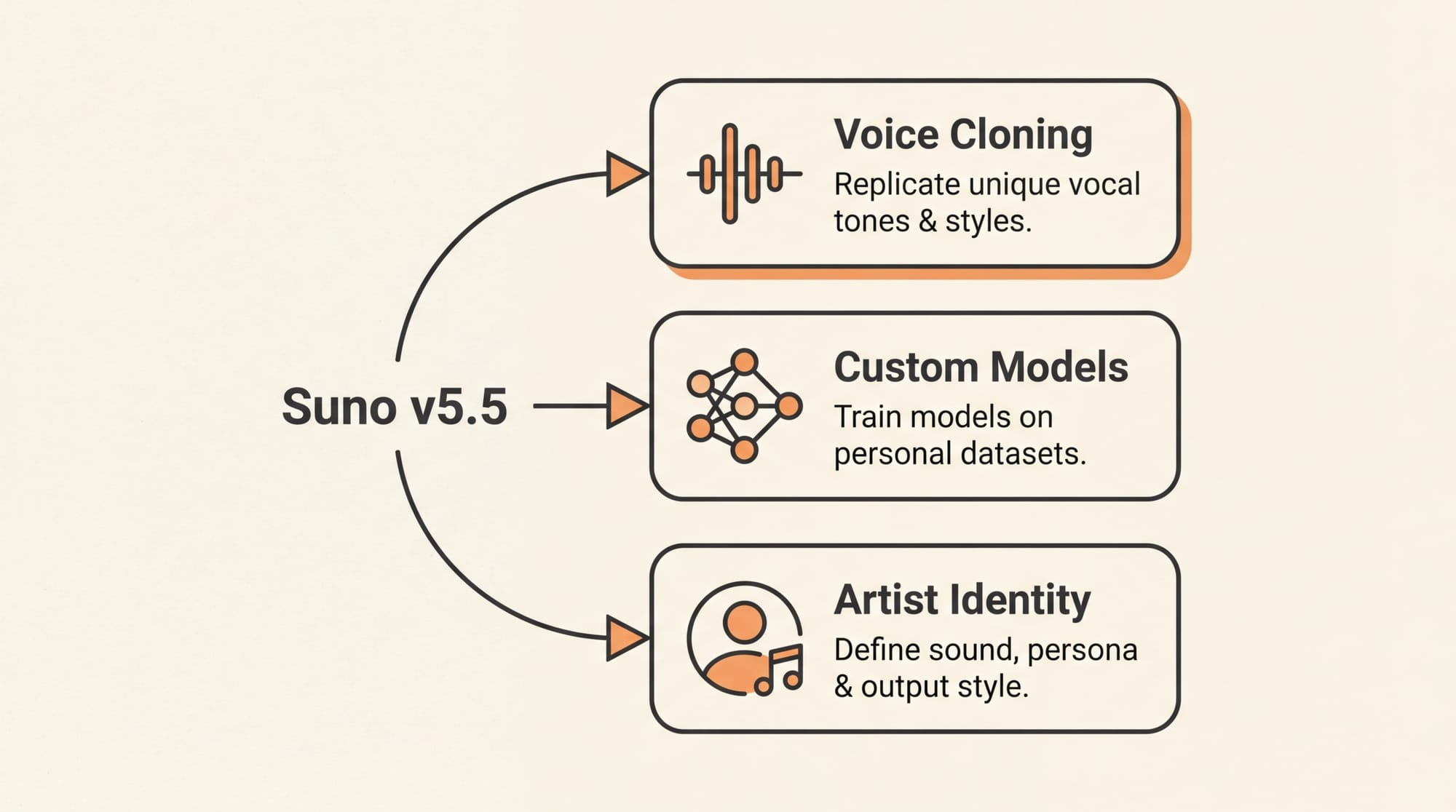
Suno v5.5 introduced three features that shift the platform from generic music generation to personalized creation. Voice cloning lets Pro and Premier subscribers record a singing sample that the system uses in generated tracks. Custom Models allow uploading original songs as stylistic references, training the system on a specific sonic identity. My Taste learns preferred genres and moods over time.
The strategic logic is clear. Generic AI music faces two existential threats: copyright lawsuits and the "AI slop" backlash. By tying generation to a creator's own voice and style, Suno sidesteps both. A track generated from your own voice and trained on your own recordings is harder to challenge as derivative work. And it has a specific identity rather than sounding like AI filler.
The Warner Music Group partnership announced alongside v5.5 reinforces this direction. Suno is positioning for a world where AI music creation is personal, licensed, and integrated into professional workflows rather than a tool for generating anonymous tracks at scale.
Udio Chooses the Walled Garden
Udio took the opposite approach. After settling copyright lawsuits with both Universal Music Group and Warner Music Group, the platform is pivoting from an open AI music generator into a licensed fan experience. Users can remix and mashup licensed music, but nothing leaves the platform. No downloads. No exports.
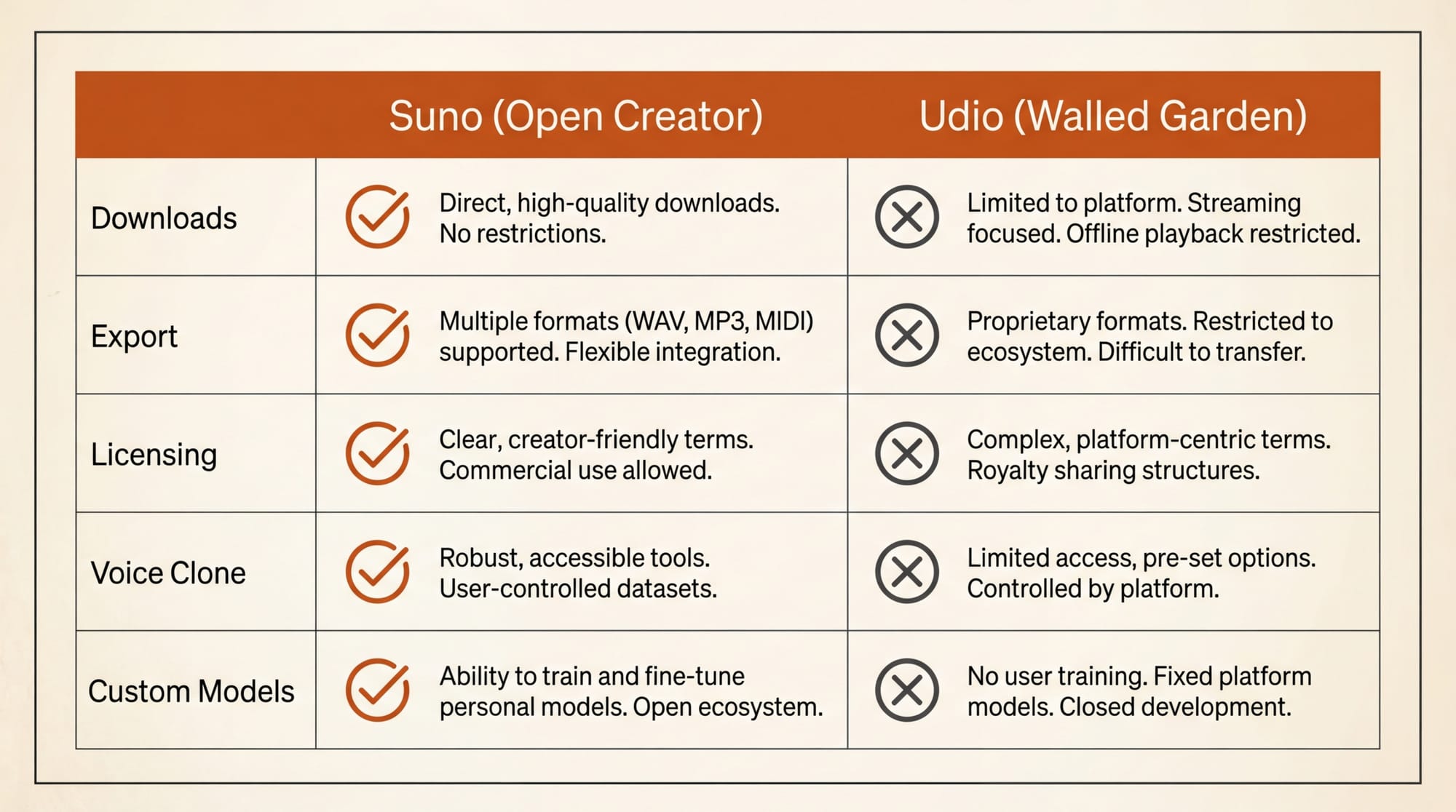
This is a capitulation dressed as a pivot. Udio's original value proposition was generating and owning AI music. The settlement terms eliminate that. What remains is a listening room where everything created stays inside, generating royalties for rights holders. Artists and songwriters must individually opt in to license their rights to Udio, which means catalog availability will be uneven.
For creators, Udio is no longer a production tool. It is closer to a karaoke platform with AI generation capabilities. The creative output cannot be used in videos, podcasts, games, or any external project. Suno, which generates music that users can download and use commercially on paid plans, now has no direct AI music competitor offering the same level of creator freedom.
Google Enters from the Infrastructure Side
Google Lyria 3 Pro takes a third approach entirely. Rather than competing with Suno or Udio on consumer music creation, Google is building the infrastructure layer. Lyria 3 Pro generates 3-minute tracks with full song structure through the Gemini API and Google AI Studio, meaning any developer can integrate structural music generation into their own products.
The acquisition of ProducerAI and integration into Google Vids signals that Google sees music generation as a feature inside larger creative workflows, not a standalone product. Need a soundtrack for a video project? Lyria handles it within the Gemini ecosystem. Building a creative app that needs music? The API provides it.
Google's approach avoids the copyright minefield. By positioning as infrastructure rather than a consumer music generator, DeepMind's Lyria team can focus on capability while leaving the licensing and rights questions to the developers building on top. This is the same playbook Google uses with cloud computing: provide the pipes, let others handle the business model.
Platforms Fight Back with Protection Tools
While generators expanded, Spotify launched Artist Profile Protection in beta. The tool lets musicians review and approve or decline releases before they appear on their profile. Declined releases are blocked from the profile, streaming stats, and recommendations. If an artist takes no action, the system blocks the release by default.
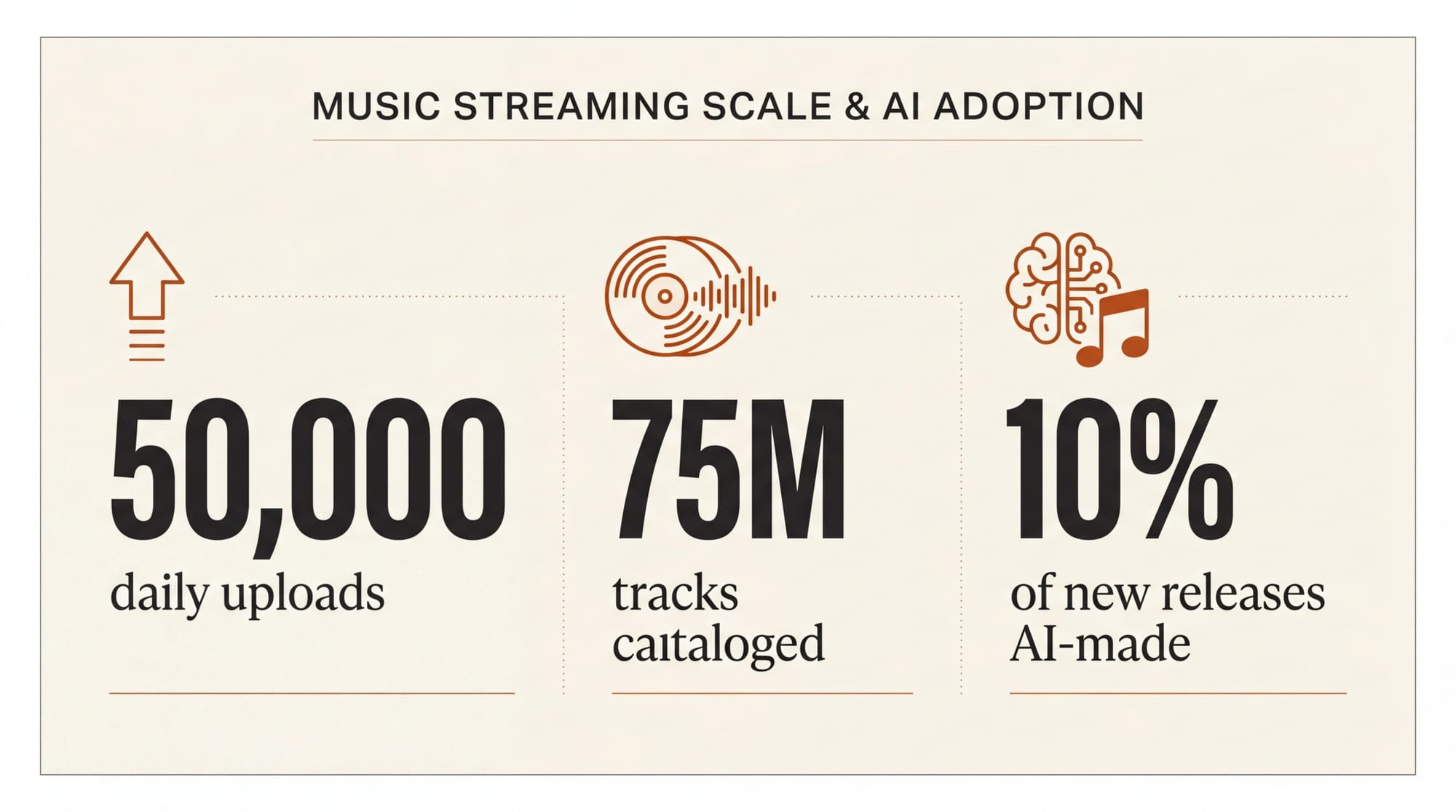
The numbers driving this are stark. Approximately 50,000 AI-generated songs reach Spotify daily. The platform deleted over 75 million tracks in 12 months for spam. Sony requested removal of 135,000 AI tracks impersonating its roster artists. AI tracks mimicking Tyler, the Creator briefly reached No. 2 on the platform before removal.
Artist Profile Protection is defensive tooling, not a solution. It puts the burden on artists to police their own names on a platform that admits it cannot reliably detect AI-generated content at upload scale. But it is also the first direct tool giving artists control over AI attribution, setting a precedent other platforms will follow.
Impact on Creators
The market has split into lanes, and creators need to pick one based on how they work.
Musicians making original work should watch Suno v5.5 closely. Voice cloning and custom models make it the first AI tool that can extend a creator's existing identity rather than replacing it. The Pro and Premier tiers are required for these features, and commercial use rights come with paid plans.
Content creators needing background music now have Lyria 3 Pro as a viable option for soundtrack generation inside the Gemini ecosystem. For YouTube videos, podcasts, and presentations, Google's structural composition produces usable results without the rights questions that come with consumer AI music tools.
Anyone building AI music into products should evaluate the Lyria 3 developer API. It is the first time a major tech company has offered structural music generation as an infrastructure service, which changes the economics of building music features into creative apps.
Artists on streaming platforms should activate Spotify's Artist Profile Protection immediately and expect similar tools from Apple Music and others. The AI attribution problem is only growing, and proactive protection is now available.
Key Takeaways
- Suno v5.5 adds voice cloning, custom models, and taste profiling, shifting from generic generation to personalized creator tools
- Udio's label settlements turn it into a walled-garden licensed platform where nothing created can be exported
- Google Lyria 3 Pro offers 3-minute structural music generation through the Gemini API, targeting developers and workflows over consumers
- Spotify Artist Profile Protection gives musicians their first direct tool to block AI-attributed tracks
- 50,000 AI songs reach Spotify daily with 75 million deleted in the past year, making this a volume crisis as much as a creative one
What to Watch
The next 90 days will determine which model wins. Watch for Suno's voice sharing feature, which will let creators collaborate using each other's cloned voices, raising new consent questions. Monitor whether Udio's opt-in licensing attracts enough artists to build a usable catalog, or whether the walled-garden restrictions kill user adoption. Google's Lyria 3 API pricing and rate limits will determine how many developers actually build on it. And track whether other streaming platforms follow Spotify's lead on artist protection tools. The AI music market went from a single race to a multi-lane highway this week, and each lane leads somewhere different.
This story was covered by Creative AI News.
Subscribe for free to get the weekly digest every Tuesday.