Hume TADA: Open-Source TTS With Zero Hallucinations
Hume AI has released TADA (Text-Acoustic Dual-Alignment), an open-source text-to-speech model that eliminates a persistent problem in AI speech synthesis: hallucinated words
Hume AI has released TADA (Text-Acoustic Dual-Alignment), an open-source text-to-speech model that eliminates a persistent problem in AI speech synthesis: hallucinated words
Freepik has shipped version 5.6 of its mobile app, adding two significant creative tools: Cinematic Shot for generating studio-grade photorealistic images and an AI Music Generator that produces royalty-free tracks on demand

Picsart just launched AI Playground, a unified creative hub that brings together more than 90 AI models from 24 providers into a single interface

Tripo debuted P1.0, a native 3D diffusion model that generates production-ready 3D assets in roughly two seconds, at GDC 2026 in San Francisco

Caitlin Kalinowski, OpenAI's head of robotics and consumer hardware, resigned on March 7, 2026, over concerns about the company's recently announced Pentagon deal

Anthropic launched the Claude Marketplace on March 6, 2026, a procurement platform where enterprises can spend their existing Anthropic commitments on third-party applications built on Claude
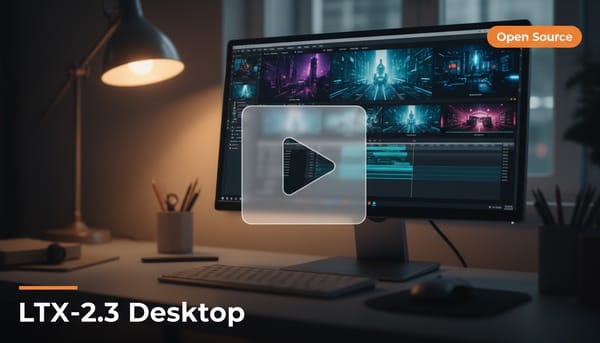
Lightricks released LTX-2.3 on March 5, 2026, a 22-billion-parameter open-source video generation model with native audio, portrait video support, and a companion desktop editor that runs the entire model locally. The release ships under Apache 2.0, making it free for commercial use and fine-tuning

Google just killed three products and replaced them with one. On February 25, 2026, the company merged Flow, Whisk, and ImageFX into a single creative workspace powered by Veo 3.1, Nano Banana, and Gemini

Apple just admitted it cannot build a competitive voice assistant alone. On February 12, 2026, the company announced a multi-year partnership with Google to rebuild Siri from the ground up using Gemini AI
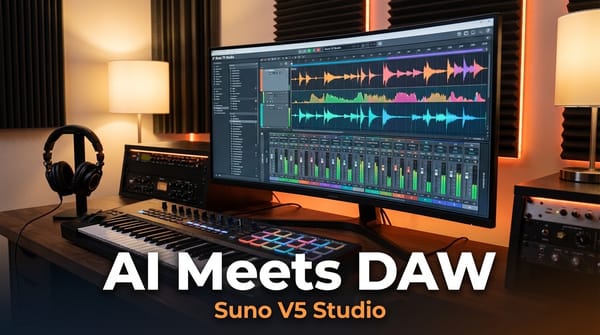
For years, AI music generation was a party trick. You typed a prompt, waited a few seconds, and got something that sounded like a song recorded through a hotel wall
On February 4, 2026, Kuaishou launched Kling 3.0 and rewrote the specification sheet for AI video generation. Native 4K at 60 frames per second