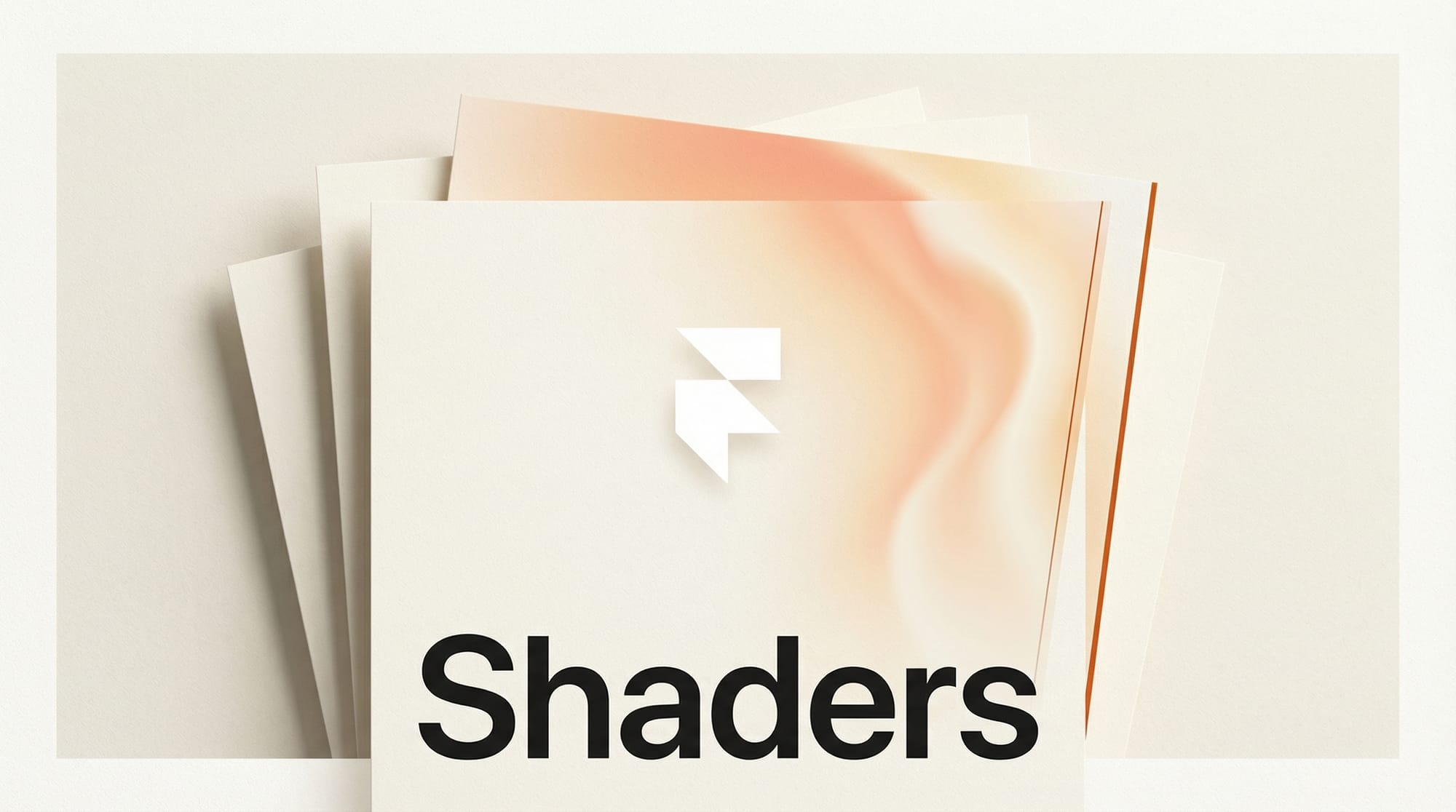
Framer shipped a significant batch of updates in the last week of March 2026, headlined by Shaders for animated visual effects and Static Files for domain-level file hosting. The updates also include Chromatic Aberration as a dedicated image shader and custom distribution controls for A/B testing. All features are live now in Framer.
What Happened
Shaders, released March 24, bring GPU-accelerated visual effects directly into Framer's design environment. Designers can now add animated gradients, particle systems, and image effects to any element by dragging a shader from the Insert Panel. Each shader is independent and fully customizable, with controls exposed in the properties panel. The effects run natively in the browser with no external dependencies.
Two days later, Framer added Chromatic Aberration as a specialized image shader. It offers four modes (Radial, Swirl, Horizontal, Vertical) for applying color distortion effects to photographs and graphics. The shader can produce static distortion or animated pulsing effects, giving designers a tool that previously required custom WebGL code or After Effects compositing.
Static Files, released March 23, lets users serve files from their Framer domain at custom URL paths. This solves a practical problem for teams that need to host verification files (Google Search Console, domain ownership), app manifests, or configuration files alongside their website. The feature includes file format validation, size limits, and path checks, and is available on Pro and Scale plans.
The A/B testing update from March 18 adds custom traffic distribution, letting teams send a smaller percentage of visitors to a test variant before scaling up. Additional improvements include tracking ID filters, sidebar folders for test organization, CMS page testing, and enhanced geography analytics.
Why It Matters
Shaders address one of web design's persistent gaps: advanced visual effects without code. Animated gradients and particles have become standard in modern web design, but implementing them typically requires a developer comfortable with GLSL or Three.js. By packaging these effects as drag-and-drop components, Framer is making GPU-accelerated design accessible to non-technical designers building sites on the platform.
Static Files is a smaller feature with outsized practical value. Domain verification has been a recurring pain point for no-code site builders. Hosting a text file at a specific path sounds trivial, but without server access it often requires workarounds or support tickets. This feature closes that gap cleanly.
What to Do Next
Open any Framer project and browse the Shaders section in the Insert Panel to explore available effects. Try Chromatic Aberration on hero images for editorial-style distortion. Check the Framer Updates page for the full changelog and documentation. If you have been waiting to verify your domain with Google Search Console or similar services, navigate to Advanced Hosting settings to upload your verification file through Static Files.