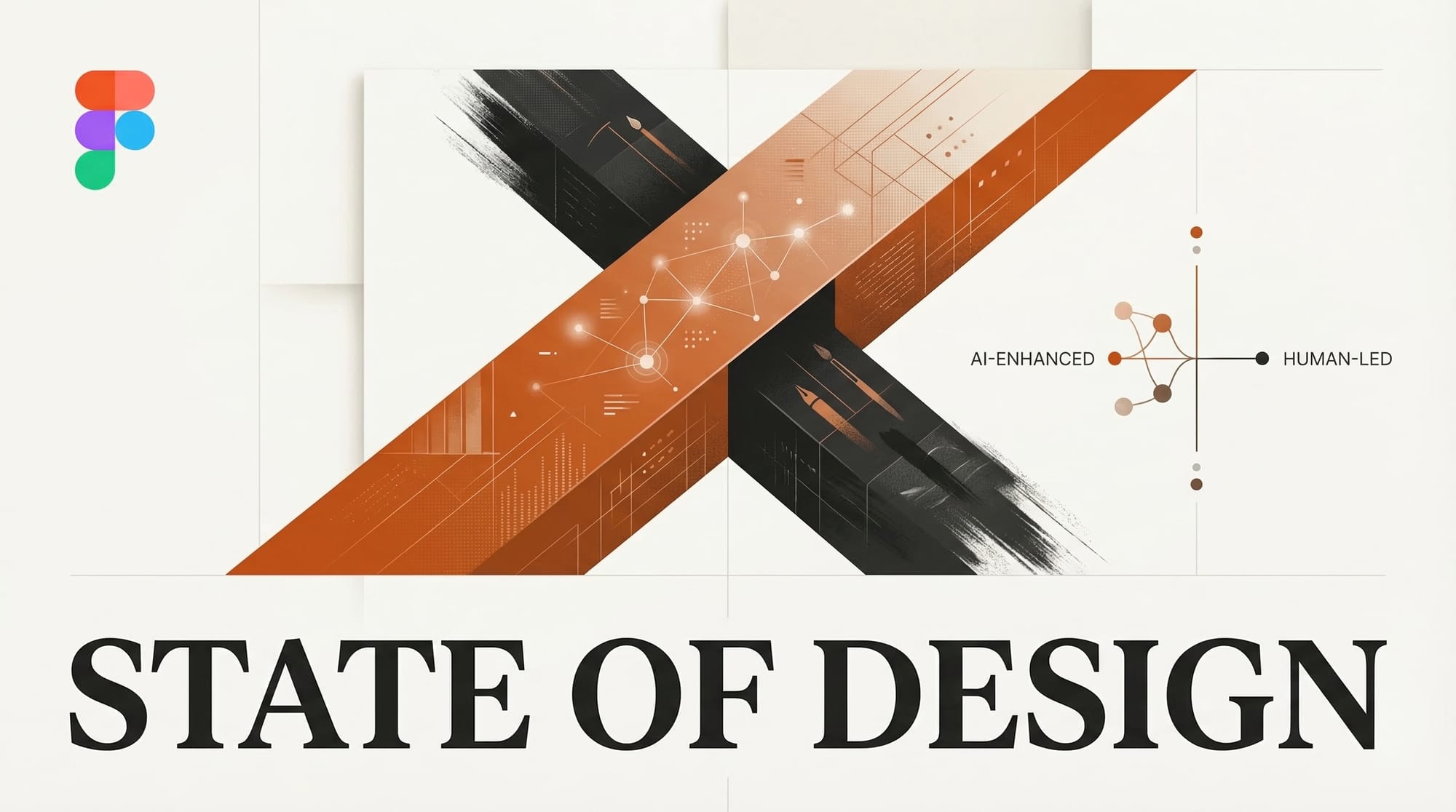
Figma released its State of Design 2026 report on March 16, revealing that designers are deeply divided on whether AI is improving their profession. The annual industry survey found 36% of designers say the field has gotten better, 35% say it has gotten worse, and 29% see no change. The report highlights a growing tension between AI's speed advantages and the validation challenges it creates.
What Happened
The State of Design 2026 report draws on Figma's survey data and an IDC workforce study to map how AI is reshaping design work. Andrew Hogan, who leads insights at Figma, discussed the findings in a conversation with UserTesting, covering hiring trends, the definition of "craft" in an AI era, and the gap between AI-generated speed and quality validation.
One of the report's key findings: when designers were asked to define "craft," 57% chose visual polish and attention to detail, while 47% selected thoughtful problem solving. The report argues that AI has intensified expectations rather than reduced workload, expanding what clients and stakeholders demand from design teams.
Why It Matters for Creators
The report captures a critical inflection point for creative AI adoption. The core insight is that faster output does not equal better output. As the report states: "The problem isn't that AI generates bad outputs. It's that designers don't know how to prove whether outputs are good or bad."
This validation gap affects every creative AI workflow. When an AI tool generates 50 layout options in seconds, someone still needs to evaluate which ones actually work. The report suggests this cognitive load is increasing, not decreasing, as AI tools become more capable.
The workforce data adds economic context. IDC projects the global design workforce will grow from 107 million in 2025 to 144 million by 2029, a 7.8% compound annual growth rate. That growth includes not just designers but product managers, marketers, and developers who now participate in design work, largely because AI tools have lowered the barrier to entry.
Key Details
- Designer sentiment: 36% say profession improved, 35% say worse, 29% unchanged
- Craft definition: 57% say visual polish, 47% say thoughtful problem solving
- Workforce growth: Design workforce projected to grow from 107M (2025) to 144M (2029)
- AI challenge: AI doesn't reduce work but intensifies expectations and cognitive load
- Validation gap: Speed without validation compounds uncertainty, not confidence
What to Do Next
Designers and creative teams should use the report's findings to set expectations with stakeholders. AI speeds up exploration but does not replace the judgment needed to select and refine the right direction. Building validation workflows alongside AI generation workflows is becoming essential.
Figma's own platform reflects this shift. The company recently launched its MCP server and Vectorize tools to bridge AI-generated designs with production code, addressing the handoff gap that the State of Design report highlights. The full report is available on the Figma blog.