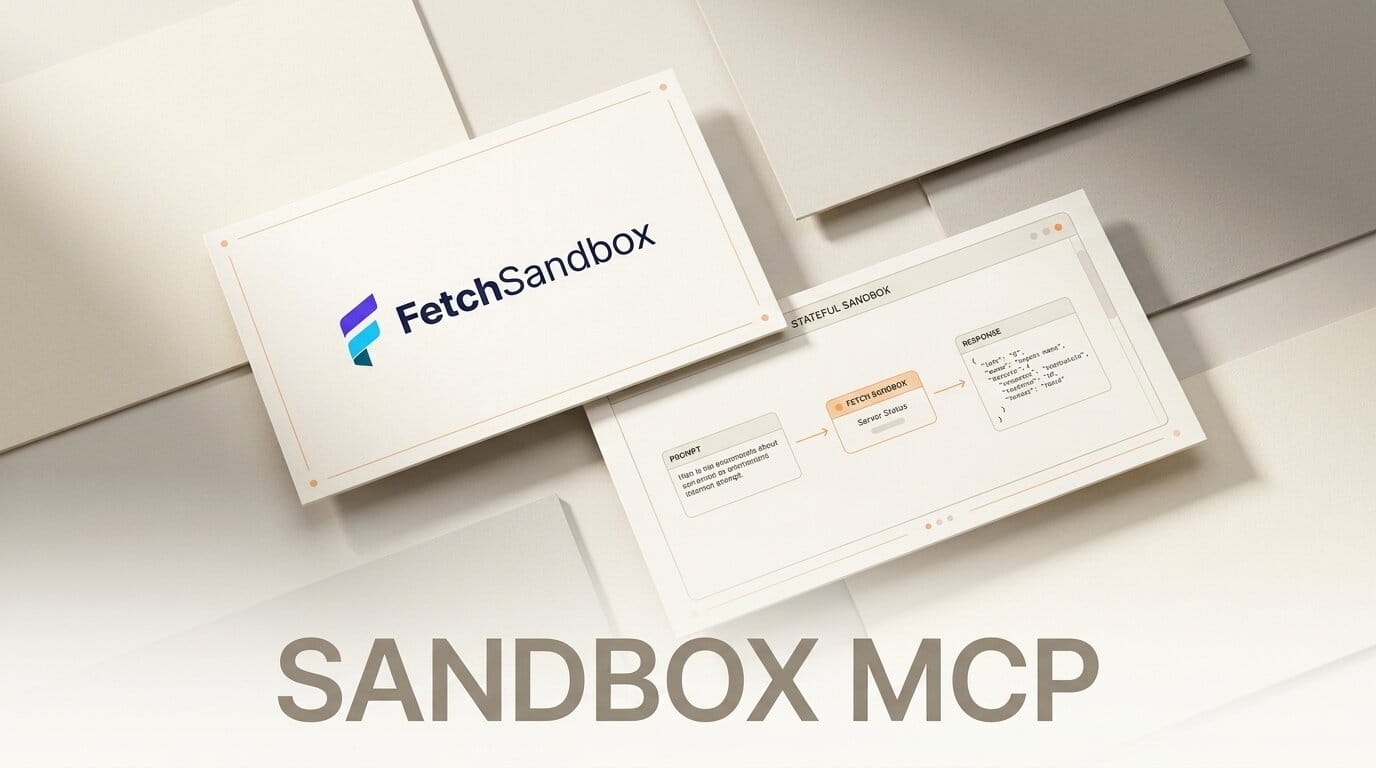
FetchSandbox launched on August 23 as a sandbox for testing the API integrations your AI coding agent writes, without touching real services or spending real credentials. It plugs into Cursor, Claude Code, Windsurf, and VS Code so an agent can exercise Stripe, GitHub, or OpenAI calls against a controlled mock before a single live key is used.
Try It: Test Agent Code Before It Ships
Install the FetchSandbox MCP server and point your agent at it. In Cursor or Claude Code, add the fetchsandbox-mcp package (currently version 0.4.2 on npm) as a server through your editor's MCP settings, then ask the agent to run the integration it just wrote. The sandbox answers as if it were the real API and returns a replayable receipt you can drop into a pull request. Wiring it in takes under a minute.
Why It Matters for Creators
Builders who ship apps with AI coding agents keep hitting the same wall. The agent writes plausible integration code, but the only way to know it works is to run it against a live service, which risks rate limits, test charges, and polluted production data. FetchSandbox turns that blind spot into a fast feedback loop. Because it speaks the Model Context Protocol, the same standard behind the MCP tooling now common in AI coding agent workflows, it drops into the loop you already use instead of adding a separate test harness.
Key Details
FetchSandbox ships as an npm package and CLI and covers 67 pre-configured API specs, including Stripe, GitHub, OpenAI, Twilio, Resend, Clerk, and Privy. It can simulate the failure cases mocks usually skip: duplicate webhooks, out-of-order delivery, stale events, 4xx and 5xx errors, and rate limiting. The tool reached number 2 Product of the Day on its Product Hunt launch and reports more than 3,100 monthly npm downloads. A free tier is available, with paid options on the pricing page.
What to Do Next
If you build with an AI coding agent, add FetchSandbox to your next integration task and let the agent verify its own work before you hand it a real key. Treat the replayable receipt as the artifact your reviewer checks in the pull request, so a broken webhook or a bad retry path surfaces in review rather than in production.