Apple's App Store reversed a years-long decline in new app submissions, with AI-powered "vibe coding" platforms like Claude Code and OpenAI Codex enabling non-programmers to build functional apps from text prompts.
What Happened
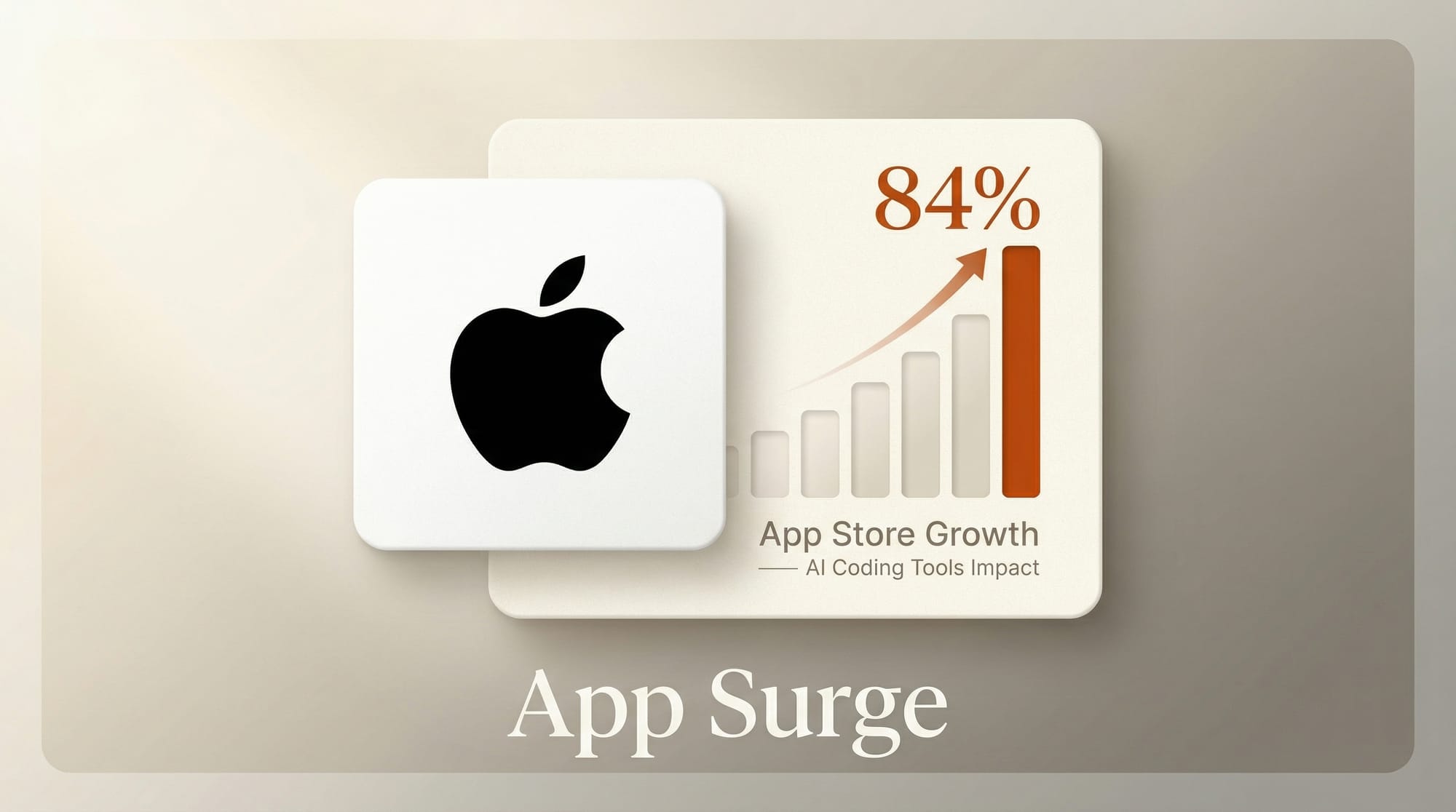
According to 9to5Mac reporting on Sensor Tower data via The Information, new App Store submissions had fallen 46% between 2016 and 2024. That trend reversed sharply, with approximately 600,000 new apps submitted in 2025, a 30% year-over-year increase. The surge has accelerated further in 2026.
Apple's review team now processes over 200,000 submissions weekly, with 90% reviewed within 48 hours at an average turnaround of 1.5 days. The influx is attributed primarily to AI coding tools that let people with no programming experience create working applications.
Why It Matters
This is the first concrete, large-scale data point showing AI coding tools driving measurable changes in app ecosystem dynamics. For creative professionals, vibe coding tools unlock the ability to build custom apps, prototypes, and tools without hiring developers or learning Swift. The barrier between "I have an idea" and "I have a working app" has dropped significantly.
Apple's response has been mixed. While acknowledging the App Store's continued relevance, the company has cracked down on some AI coding apps like Anything and Replit for violating App Review Guidelines by generating interpreted code.
Key Details
- Historical decline: 46% drop in new apps from 2016 to 2024
- 2025 reversal: ~600,000 new apps, 30% year-over-year increase
- Key tools cited: Claude Code (Anthropic), Codex (OpenAI)
- Review capacity: 200,000+ submissions/week, 90% reviewed in 48 hours
What to Do Next
Creators interested in building their own tools can start with Claude Code or OpenAI Codex. For a comparison of available options, see our guide to AI coding tools in 2026.