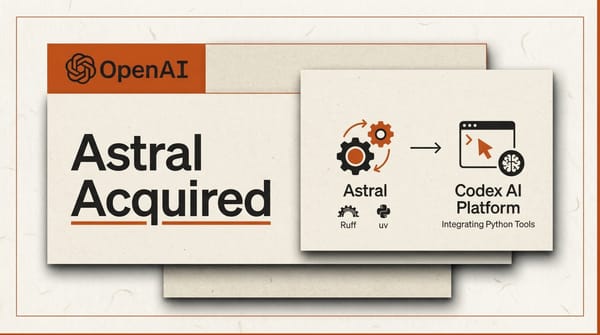
OpenAI Acquires Astral to Boost Codex Python Tools
OpenAI is acquiring Astral, the company behind uv, Ruff, and ty. The team joins Codex, which has 2M+ weekly users. All tools remain open source.
Deep dives, tutorials, and analysis for AI-powered creators.
OpenAI is acquiring Astral, the company behind uv, Ruff, and ty. The team joins Codex, which has 2M+ weekly users. All tools remain open source.
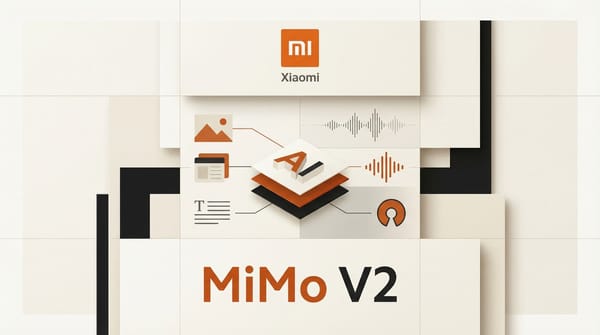
Xiaomi has launched the MiMo-V2 family, featuring a multimodal model that processes audio, images, and video alongside a TTS engine capable of contextual emotion and singing synthesis.
OpenAI has launched Parameter Golf, an open research competition offering $1M in computing credits to whoever can compress AI models into just 16MB with only 10 minutes of training time.

MiniMax, the company behind the Hailuo video generation platform, released M2.7 with 10 billion activated parameters and built-in self-improvement capabilities.
Anthropic has published the largest multilingual qualitative AI study ever conducted, interviewing 81,000 people across 159 countries in 70 languages about what they want from AI.
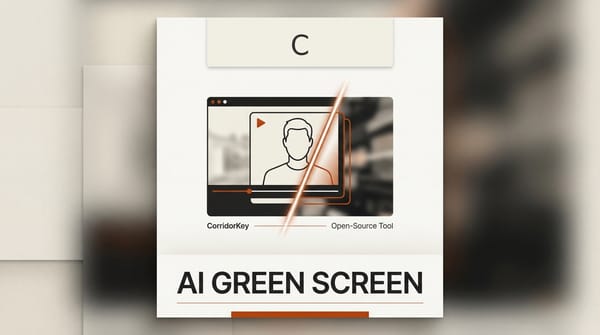
Corridor Digital co-founder Niko Pueringer releases CorridorKey, an AI chroma keyer that handles hair, motion blur, and transparency at VFX-production quality.

Rebel Audio has launched out of stealth with $3.8 million in seed funding and Mark Burnett as advisor, positioning itself as the Canva of podcasting for first-time creators.

Google Labs launched Stitch, a free AI-native design platform that translates natural language descriptions into high-fidelity UI designs through what the company calls vibe design.

BandM8 debuts at NVIDIA GTC with a music-to-music AI platform that generates real-time MIDI accompaniment from a single instrument.
NVIDIA unveiled Cosmos 3 at GTC, the first world foundation model that unifies synthetic world generation, physical AI reasoning, and action simulation.

Amazon Ads launches Creative Agent, a free AI tool that handles scriptwriting, image generation, video, voiceovers, and music for ads on Amazon.
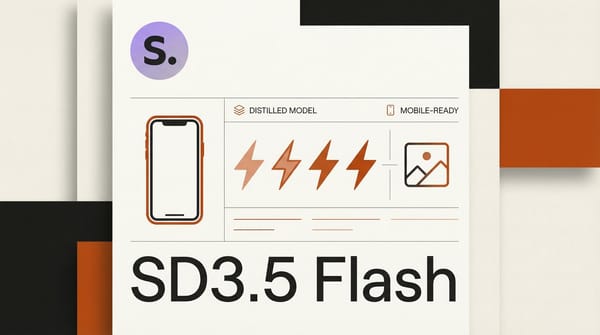
SD3.5-Flash generates images in just 4 steps instead of the usual 30 to 50, making on-device AI image generation practical on smartphones and laptops with under 8GB of RAM.