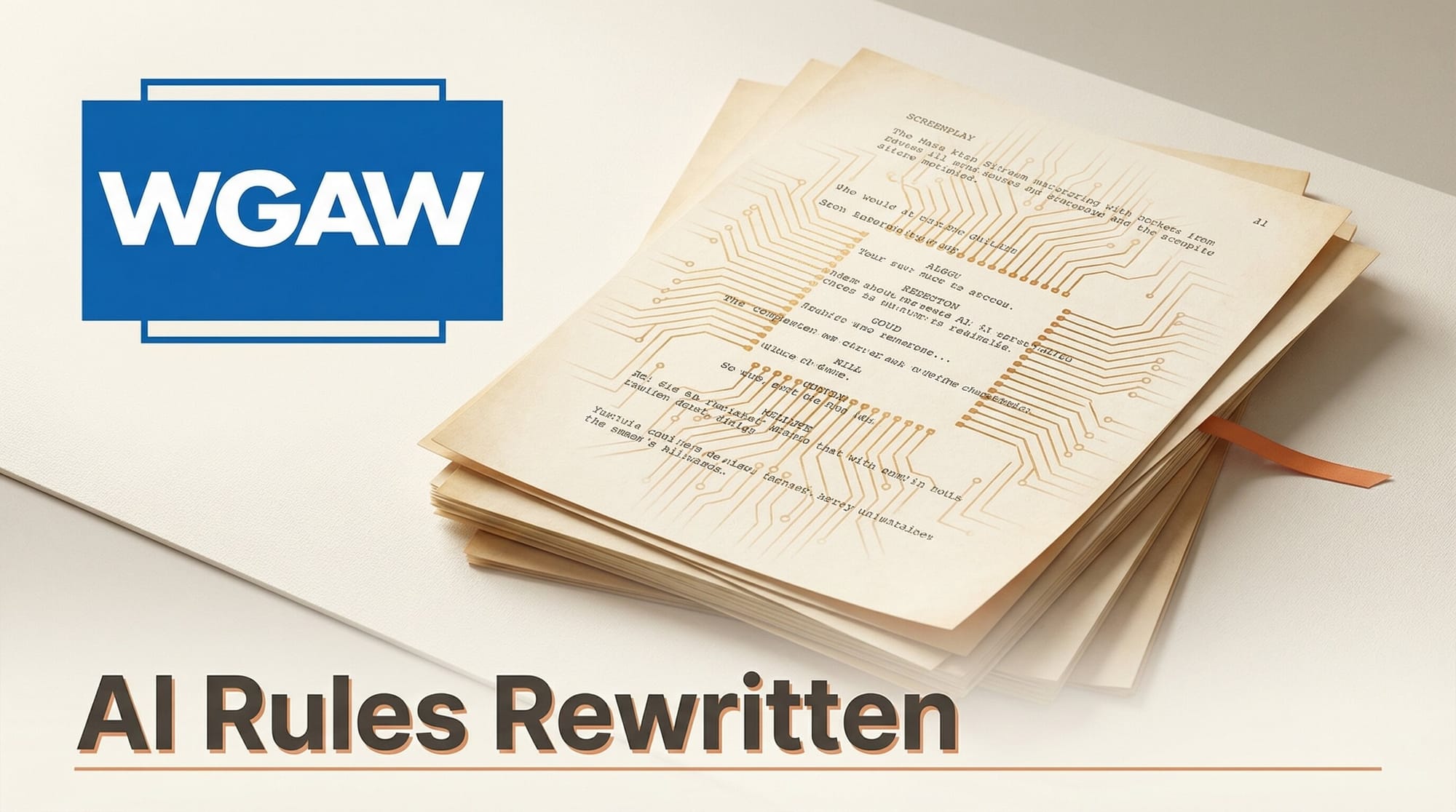
The Writers Guild of America and the Alliance of Motion Picture and Television Producers reached a tentative four-year agreement on April 5, 2026, expanding the AI protections screenwriters won during the 148-day strike in 2023. The deal, completed in just three weeks of negotiations and secured a full month before the contract's May 1 expiration, formalizes a principle that will ripple well beyond Hollywood: writers' creative output is protected property, and using it to train AI models without permission is a compensable offense.
Background
The 2023 WGA strike was the first major labor action in the entertainment industry to center artificial intelligence. After nearly five months on the picket line, writers secured foundational protections: AI-generated content cannot be classified as "literary material" under the contract, companies cannot force writers to use AI tools, and studios must disclose when materials provided to writers were generated by AI.
Those protections were defensive. They drew lines around what AI could not do. The 2026 agreement shifts to offense.
Since 2023, the landscape has changed dramatically. Studios have invested billions in AI infrastructure. Copyright lawsuits over AI training data have multiplied across industries. And writer employment has cratered: a 9.4% decline in 2024 compared to 2023 and a 24.3% drop from 2022, according to guild data cited by Prism News. Fewer shows are being greenlit, health plan contributions have plummeted, and the writers who remain employed are doing more work for less certainty.
Deep Analysis
Training Data as Property
The most significant expansion in the 2026 agreement is the treatment of writers' work as licensable property for AI training purposes. The 2023 contract reserved the WGA's right to assert that using writers' material for AI training was prohibited. The 2026 deal goes further: it requires studios to actively police whether scripts, treatments, and other written material are being ingested into AI training datasets, and to compensate writers when that material is used to generate AI outputs.
John August, co-chair of the WGA Negotiating Committee, framed the principle clearly: when the work writers create is exploited by employers to make other things, they get a share of that. The goal in negotiation was to ensure that if employers use material guild members wrote to create AI-generated outputs, they must compensate writers for that use.
This is not a theoretical protection. It establishes a licensing framework where unauthorized AI ingestion of written material becomes a contractual violation with financial consequences. The specific enforcement mechanisms and audit procedures remain confidential pending the membership ratification vote, but the principle itself is now embedded in the agreement.
The Four-Year Bet on Stability
The deal's four-year term, breaking from the standard three-year cycle, reflects a calculated trade. Studios wanted an extra year without strike risk. Writers needed urgent financial relief for their health plan.
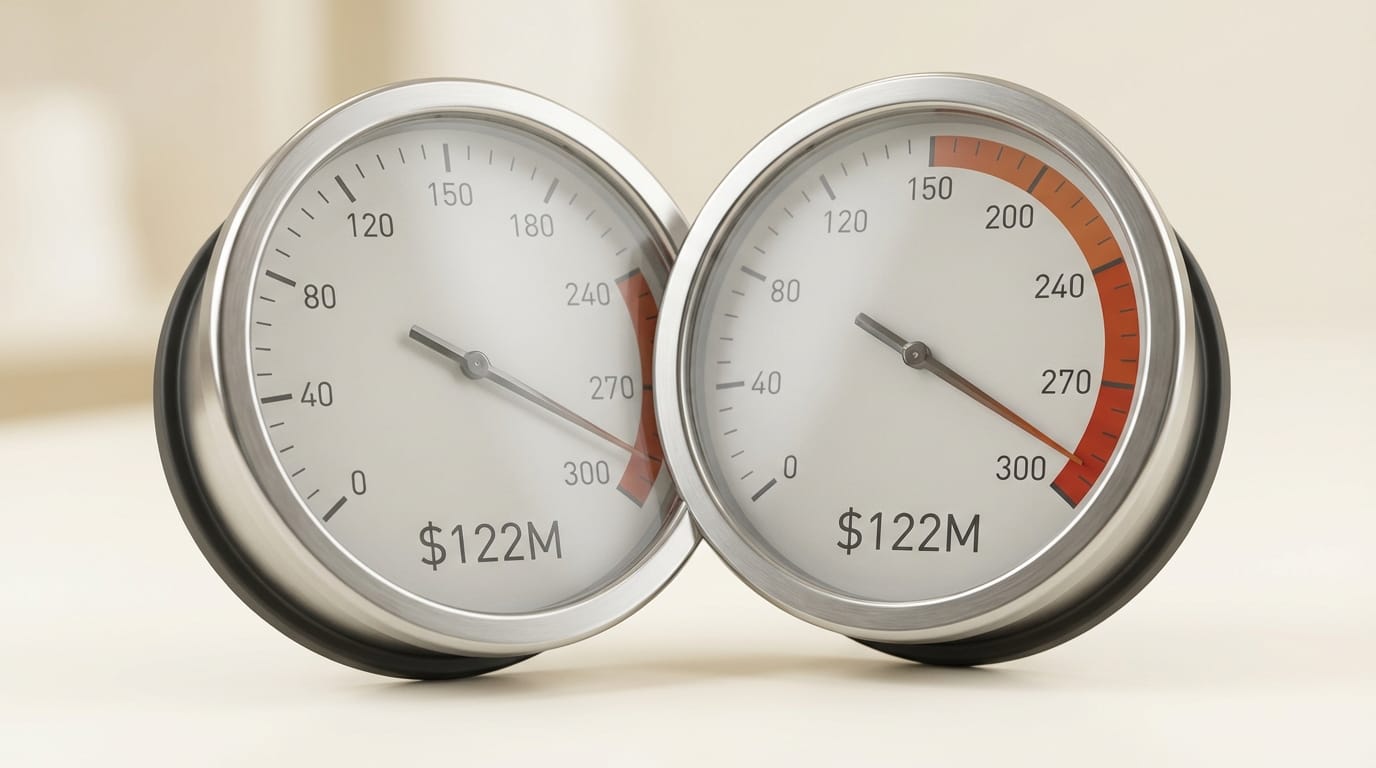
The numbers tell the story. The WGA health fund's costs surged 63% between 2020 and 2025, rising from $172 million to $281.7 million. Meanwhile, employer contributions dropped 9% to $219.8 million in 2025, down from $241.1 million in 2022. The fund lost $122 million during 2023 and 2024 as production slowdowns following the strike reduced the number of writers generating contributions.
In exchange for the longer contract, studios agreed to a substantial cash infusion and dramatically increased employer contribution caps. The deal also addresses the persistent problem of "free work," where writers perform unpaid development work that has eroded compensation across the industry.
For writers, the trade-off is clear: a guaranteed four years of improving protections without another strike, plus a stabilized health plan. For studios, it means labor peace through 2030 in a period where they are racing to integrate AI into production workflows.
The Template for SAG-AFTRA and DGA
The WGA deal lands at the most consequential moment possible for Hollywood labor negotiations. Both SAG-AFTRA and the Directors Guild of America contracts expire on June 30, 2026. The DGA is set to begin formal talks on May 11. SAG-AFTRA has already completed a month of preliminary negotiations with studios without reaching agreement, with talks set to resume in June.
The WGA's "training data as property" framework gives both unions a starting position. If writers' scripts are compensable when used for AI training, actors' likenesses and directors' creative decisions carry similar arguments.
SAG-AFTRA faces a harder version of the same problem. Their core AI issue is synthetic performers, the fully AI-generated characters that require no real actor. The union sought a veto over synthetic performers in 2023 and was denied. This year, one proposal gaining traction is the "Tilly tax," a payment studios would make to a union fund whenever they deploy synthetic performers instead of hiring real actors.
The WGA's speed and tone also matter. Three weeks of productive negotiation, compared to five months of acrimony in 2023, signal that both sides have recognized AI is not going away and that the question has shifted from whether to protect workers to how.
What the Fine Print Leaves Open
The full contract language will not be released until the membership ratification vote is complete, and several critical details remain unresolved in public reporting.
Enforcement is the biggest question. The agreement requires studios to "police" AI training data licensing, but the specific audit mechanisms, reporting requirements, and penalties for violations have not been disclosed. How studios will track whether scripts are being fed into third-party AI systems, particularly when they license content to partners who may have their own AI initiatives, remains unclear.
Compensation structures are also pending. The principle that AI training use is compensable is established, but the rates, payment mechanisms, and whether compensation flows to individual writers or a collective fund are not yet public.
There is also the question of scope. The agreement covers material written under WGA contracts, but writers produce substantial creative work outside those agreements, including personal projects, spec scripts, and adaptations. Whether the training data protections extend to material written outside the MBA framework will be important as AI companies seek training data from every available source.
Impact on Creators
For screenwriters, the immediate impact is job security and health coverage. The four-year term provides stability, the health plan gets a financial lifeline, and the AI protections ensure that writers' existing work cannot be quietly fed into studio AI systems without consequences.
For creators outside Hollywood, the deal establishes a precedent. If a labor union can negotiate AI training data compensation into a binding contract, it creates a model for musicians, visual artists, journalists, and other creative professionals who are fighting similar battles. The ongoing upheaval in AI music, where Suno, Udio, and major labels are each taking different approaches to rights and licensing, now has a concrete example of how compensation for AI training can be codified.
For AI tool builders in the creative space, the deal signals that training on professional creative work without licensing will carry increasing legal and contractual risk. Studios that have signed this agreement will need to ensure their AI vendors and partners are not using WGA-covered material without proper authorization. That compliance requirement will flow downstream to every AI company in the studio supply chain.
The growing use of AI in film production, from synthetic actors to AI-assisted editing, now operates within a more defined legal landscape where the principle of consent and compensation for training data has contractual backing.
Key Takeaways
- The WGA's four-year deal with studios formally classifies writers' creative output as licensable property for AI training, with compensation required for unauthorized use.
- The agreement was reached in three weeks, a sharp contrast to the 148-day strike in 2023, signaling a more mature approach to AI negotiations from both sides.
- A health plan in crisis drove the four-year term: costs up 63% since 2020, contributions down 9%, and a $122 million shortfall during the post-strike production slowdown.
- SAG-AFTRA and DGA contracts expire June 30, 2026. The WGA's training data framework will serve as the starting point for those negotiations.
- Full enforcement details, including audit procedures, compensation rates, and scope beyond MBA-covered work, remain confidential until after the membership ratification vote.
What to Watch
The WGA membership ratification vote will determine whether this deal takes effect. Historically, tentative agreements have passed, but the specific AI enforcement terms could generate debate among members who want stronger protections.
DGA negotiations beginning May 11 will test whether directors can secure comparable AI protections, particularly around AI-assisted editing and visual effects decisions that overlap with directorial authority.
SAG-AFTRA's June deadline is the highest-stakes negotiation remaining. The "Tilly tax" on synthetic performers, combined with the WGA's training data precedent, could produce the most comprehensive AI labor framework in any creative industry. A failed agreement there would likely mean another strike, with far broader implications than the writers' walkout in 2023.
Beyond Hollywood, watch for whether this contract model influences AI training data negotiations in publishing, music, and journalism, industries where creators are fighting the same battle with fewer organized labor structures to back them up.