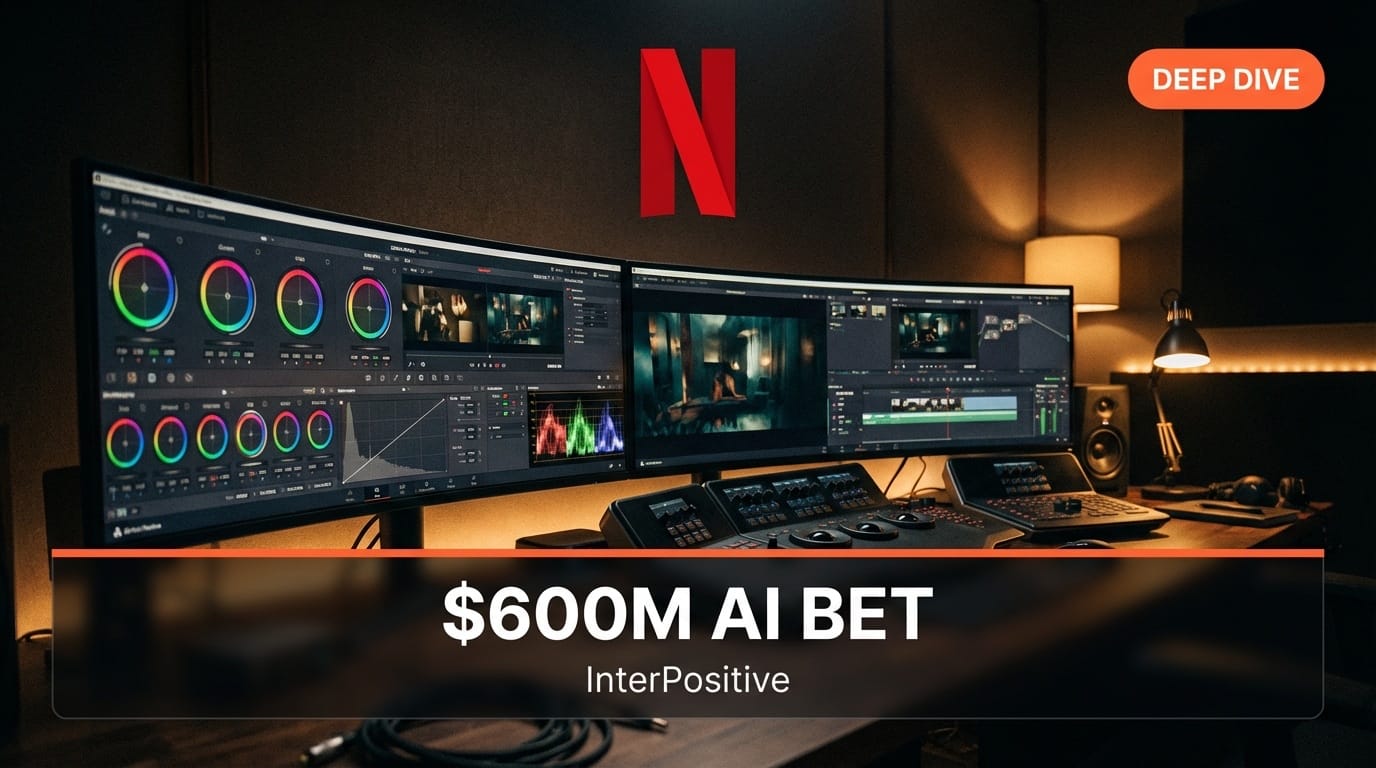
Netflix just paid up to $600 million for a 16-person AI startup that most filmmakers had never heard of. InterPositive, founded by Ben Affleck four years ago in stealth mode, builds AI tools that handle post-production tasks like wire removal, shot reframing, color grading, and visual effects. The acquisition signals something bigger than one deal: the company that produces more original films than any studio in history now believes AI-powered production tools are a strategic asset worth betting hundreds of millions on.
Background
InterPositive was born out of frustration. Affleck, a two-time Academy Award winner who has directed and produced dozens of projects, grew tired of how long traditional post-production workflows took. A wire removal that takes a VFX team days to clean up frame by frame. Color grading sessions that stretch across weeks. Reshoots needed because a lighting setup was slightly off. He assembled a small team of engineers and researchers to build AI systems that could handle these tasks in minutes rather than days.
The company operated in stealth for roughly four years, developing its technology on proprietary datasets filmed on controlled soundstages that mimicked real production conditions. Unlike generative AI tools that create synthetic content from text prompts, InterPositive's system trains on a production's own dailies and then assists filmmakers with editing, color, VFX, and lighting tasks using the visual language of the actual project. Affleck described the approach as building "purpose-built tools that represent and protect qualities that make great stories: nuances of filmmaking, production challenges, lens distortion, light behavior."
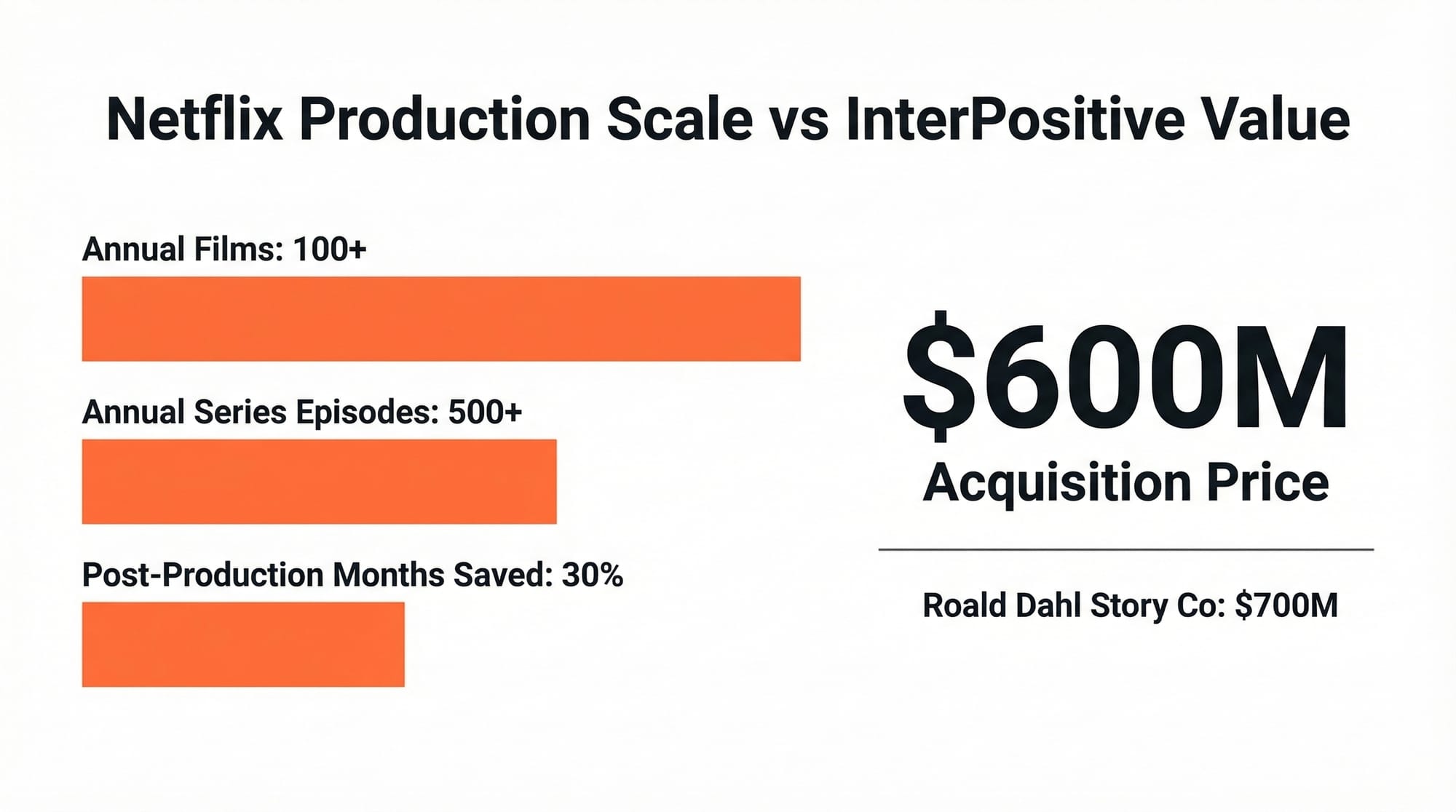
Netflix announced the acquisition on March 5, with Bloomberg revealing the $600 million price tag on March 11. The upfront cash payment is lower, with additional payouts tied to performance milestones. All 16 team members join Netflix, and Affleck becomes a senior adviser.
Deep Analysis
What InterPositive Actually Does
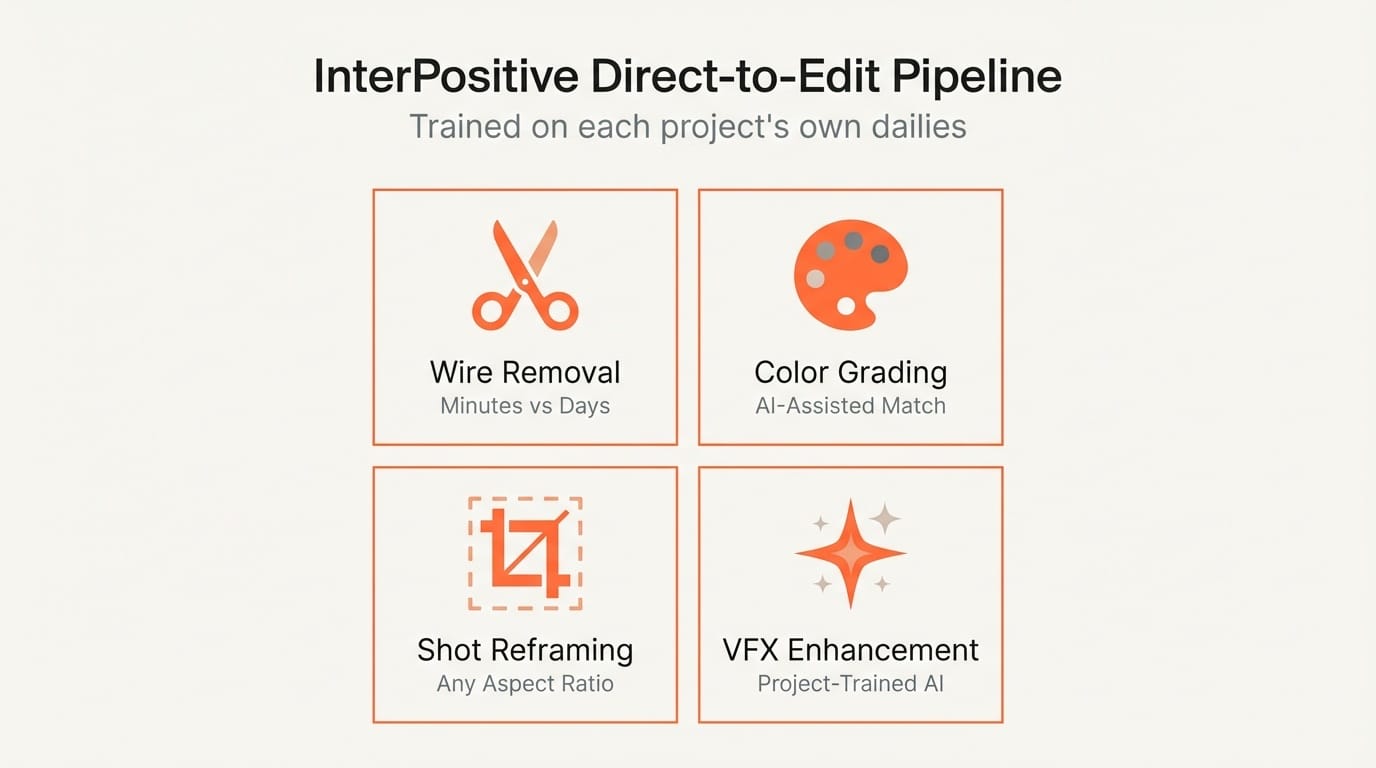
InterPositive is not another text-to-video model. It is a post-production AI system that works with footage that already exists. The system builds a project-specific AI model from a production's dailies, then makes that model available throughout the editing and finishing pipeline. A director can ask the system to remove wires from a stunt sequence, adjust lighting in a scene that was shot under imperfect conditions, reframe a shot for a different aspect ratio, enhance a background, or recover a missed shot by reconstructing it from surrounding footage.
The technology uses what the company calls a "Direct-to-Edit" workflow. Rather than generating synthetic performances or replacing actors, it handles the technical craft work that traditionally requires large teams and long timelines. The system is trained to understand cinematic rules: lens distortion, light behavior, visual consistency across shots. It speaks the vocabulary that cinematographers and directors already use.
Why Netflix Paid $600 Million
Netflix produces over 100 original films per year, plus hundreds of series episodes. Each of those projects goes through weeks or months of post-production involving color grading, VFX compositing, shot cleanup, and finishing. Even small efficiency gains at that scale translate into enormous savings. If InterPositive cuts post-production time by 30% across Netflix's slate, the acquisition pays for itself within a few years.
But the real value is strategic. Netflix has historically built its competitive advantages through technology: recommendation algorithms, adaptive streaming, production management tools. Owning the AI layer of post-production gives Netflix a capability that competing studios and streamers cannot easily replicate. As one industry analyst noted, Netflix believes "real competitive advantage in 2026 lives inside the tools that shape how content gets made, not just what content gets made."
The Hollywood Labor Question
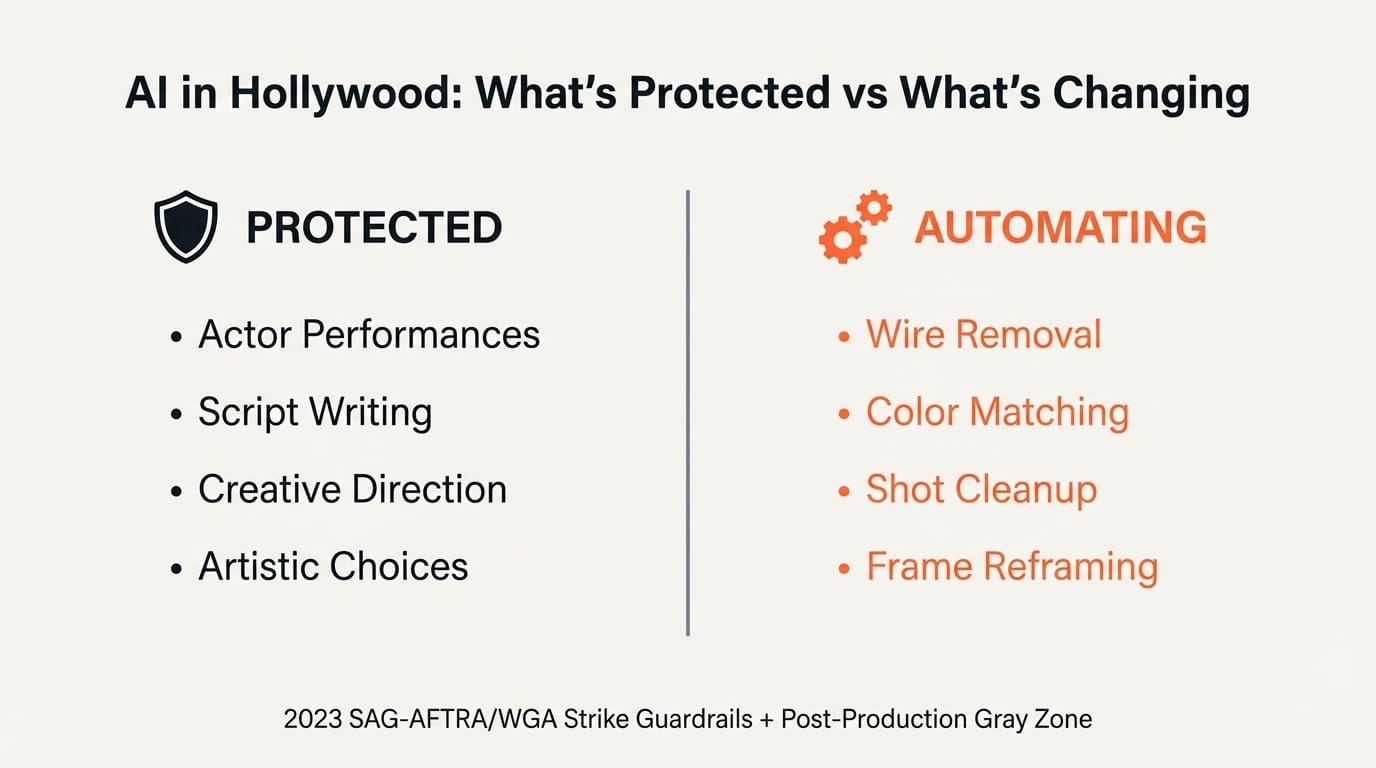
This acquisition lands in a post-strike Hollywood where AI in production remains a charged subject. The 2023 SAG-AFTRA and WGA strikes established guardrails around AI-generated performances and AI-written scripts, but post-production AI tools occupy a grayer zone. Wire removal, color grading, and shot reframing are technical tasks, not creative performances. InterPositive's design specifically keeps creative decisions with human filmmakers while automating the mechanical execution.
Netflix Chief Content Officer Bela Bajaria emphasized that the tools should "expand creative freedom" while keeping "creators and their artistic intentions at the center." Chief Product Officer Elizabeth Stone added the technology should "empower storytellers, not replace them." Whether the industry accepts that framing will depend on how the tools are actually deployed and whether they reduce the number of post-production jobs.
Competitive Landscape Shifts
Netflix is not the only company building AI post-production tools. Runway offers AI-powered VFX and video editing. Topaz Labs handles upscaling and enhancement. Adobe is integrating AI throughout Premiere Pro and After Effects. But InterPositive is designed for a fundamentally different workflow: it trains on each project's own footage rather than using generic pre-trained models, which means outputs match the specific look, lighting, and style of the production.
For competing studios (Disney, Warner Bros., Amazon), this acquisition creates pressure to develop or acquire similar capabilities. Amazon already has Bedrock for AI infrastructure and owns MGM Studios. Apple has been investing in production tools through its hardware ecosystem. The AI post-production arms race is now officially underway.
Impact on Creators
If you work in post-production, this acquisition changes your planning horizon. The tools InterPositive builds will initially be available only to Netflix productions and its creative partners, not as a commercial product. But the validation of AI-assisted post-production at this price point will accelerate adoption across the industry. Studios that were hesitant to invest in AI workflows now have a $600 million benchmark telling them this technology is real and valuable.
For independent filmmakers and small studios, the near-term impact is indirect but meaningful. InterPositive's approach proves that AI can handle technical post-production tasks without replacing creative decision-making. This validation will drive more investment into accessible AI post-production tools. Expect Runway, Topaz, and emerging competitors to accelerate their product development. Within 12-18 months, tools approaching InterPositive's capabilities will likely be available to independent creators at consumer price points.
For VFX artists and colorists specifically, this is a career inflection point. The mechanical aspects of the job (frame-by-frame wire removal, manual color matching across shots) are being automated. The creative aspects (establishing a visual look, making artistic lighting choices, designing effects that serve the story) become more valuable. Investing in your creative judgment and directorial eye matters more than your speed at rotoscoping.
Key Takeaways
1. Netflix paid up to $600 million for AI post-production tools, validating the category as a strategic asset worth hundreds of millions.
2. InterPositive trains on each project's own footage rather than using generic models, preserving the specific look and style of each production.
3. The technology handles technical craft work (wire removal, color, reframing) while keeping creative decisions with human filmmakers.
4. Competing studios now face pressure to develop or acquire similar AI post-production capabilities, accelerating industry-wide adoption.
What to Watch
Track how Netflix deploys InterPositive across its production slate over the next 6-12 months. The first films and series to use the technology will reveal how much it actually accelerates production timelines and whether the quality matches traditional post-production workflows. Watch for competing acquisitions from Amazon Studios, Disney, and Apple. If the technology delivers on its promise, expect at least one more major AI post-production acquisition before the end of 2026.
For creators, the most important signal is whether Netflix makes InterPositive's tools available to external productions, similar to how it shares some internal production technology. If it does, independent filmmakers could gain access to Hollywood-grade AI post-production tools. If it keeps the technology proprietary, the gap between Netflix-level production quality and independent work widens further.
Deep dive by Creative AI News.
Subscribe for free to get the weekly digest every Tuesday.